Alpenglow is Solana’s biggest consensus and architecture upgrade to date.
The upgrade reduces transaction finality to 150ms, down from 12 seconds.
Key innovations include off-chain voting, P-tokens, Rotor, and Firedancer.
It increases block capacity by 25% and enhances fault tolerance.
The update is designed to make Solana more decentralized, efficient, and scalable for future use cases.
The Alpenglow upgrade introduces a suite of powerful changes that make Solana faster, cheaper, and more accessible.
Source: Helius
Here’s a breakdown of its core features:
Currently, validators cast thousands of on-chain votes for each new block. This process is bandwidth-intensive and adds unnecessary load to the network.
With Alpenglow, voting happens off-chain. Validators privately share votes, posting just one proof on-chain, significantly cutting down on congestion and lowering transaction costs.
Instead of multiple transactions, validators will now submit a single Validator Admission Ticket per cycle.
This streamlined process reduces operational costs, making it easier for smaller operators to join and enhancing decentralization.
Solana’s gossip protocol, used by nodes to stay in sync, has been re-engineered.
The upgrade reduces unnecessary chatter, allowing nodes with slower internet connections to participate while improving network reliability under heavy load.
By the end of 2025, block size will expand by 25%, enabling more transactions per block and shorter wait times during peak activity.
This boost is vital for supporting large-scale applications like gaming, NFTs, and DeFi.
Jump Crypto’s Firedancer, a new independent validator client, is a cornerstone of the Alpenglow upgrade.
With SIMD-0370, Firedancer removes the fixed block size limit and enables automatic scaling based on hardware capacity, increasing both resilience and throughput.
The new P-token standard is designed to be lean and efficient. It reduces computation demand by up to 95% compared to the current SPL format, saving block space and boosting overall network performance by around 10%.
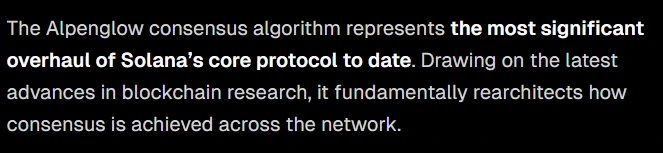
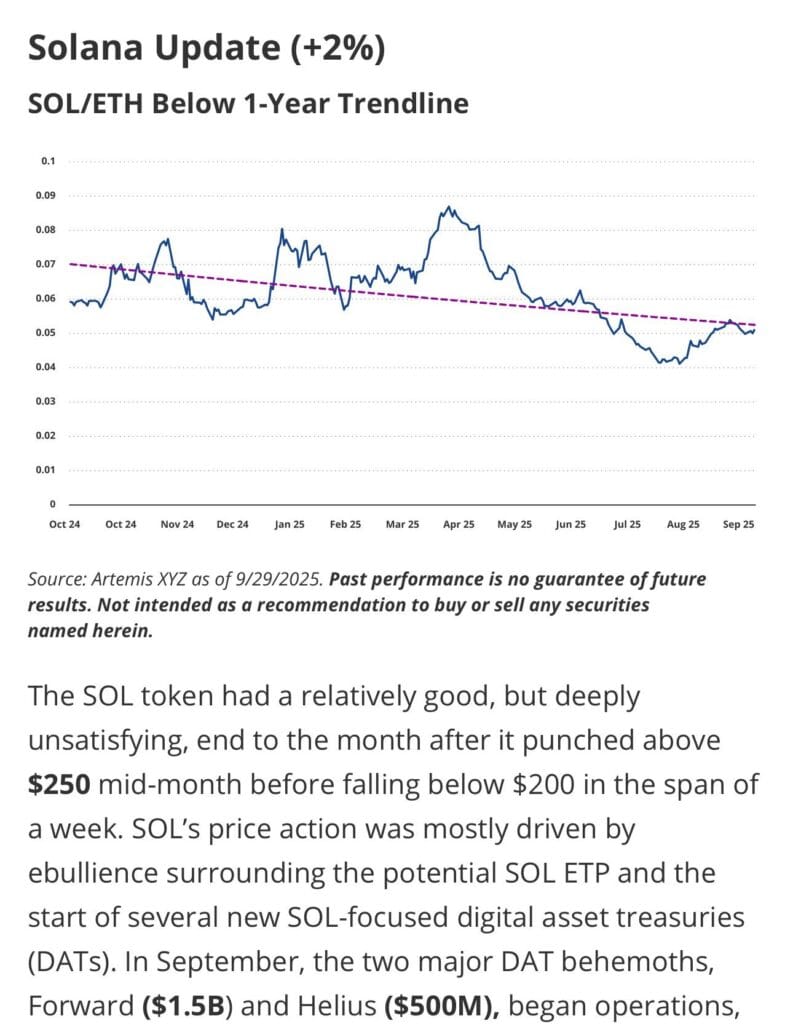
While VanEck’s report outlines the headline features, Solana Labs’ Alpenglow white paper dives deeper into the technical overhaul powering this upgrade.
VanEck’s Report
Source: X (@solana_daily)
Replacing the aging Turbine system, Rotor improves how data is distributed across validators.
It eliminates packet duplication and accelerates block propagation, ensuring faster confirmation even during high traffic periods.
This technique allows validators to combine multiple signatures into a single payload.
The result? A dramatic drop in computational load for transaction verification, with no compromise on security.
Solana will now stay operational even if up to 40% of validators go offline. This robust fault tolerance ensures network uptime and reliability, critical for financial-grade applications.
With ticket-based voting, validator participation becomes more predictable and transparent. This encourages a more decentralized and inclusive network by lowering barriers to entry.
The Alpenglow upgrade is a strategic pivot. By delivering sub-second finality, lower costs, and greater scalability, Solana is preparing to support the next wave of innovation across:
Real-time DeFi platforms
Blockchain-based gaming ecosystems
Tokenized real-world assets
Scalable social applications
As VanEck noted, Alpenglow sets a new benchmark, potentially establishing Solana as the fastest and most efficient blockchain on the planet.
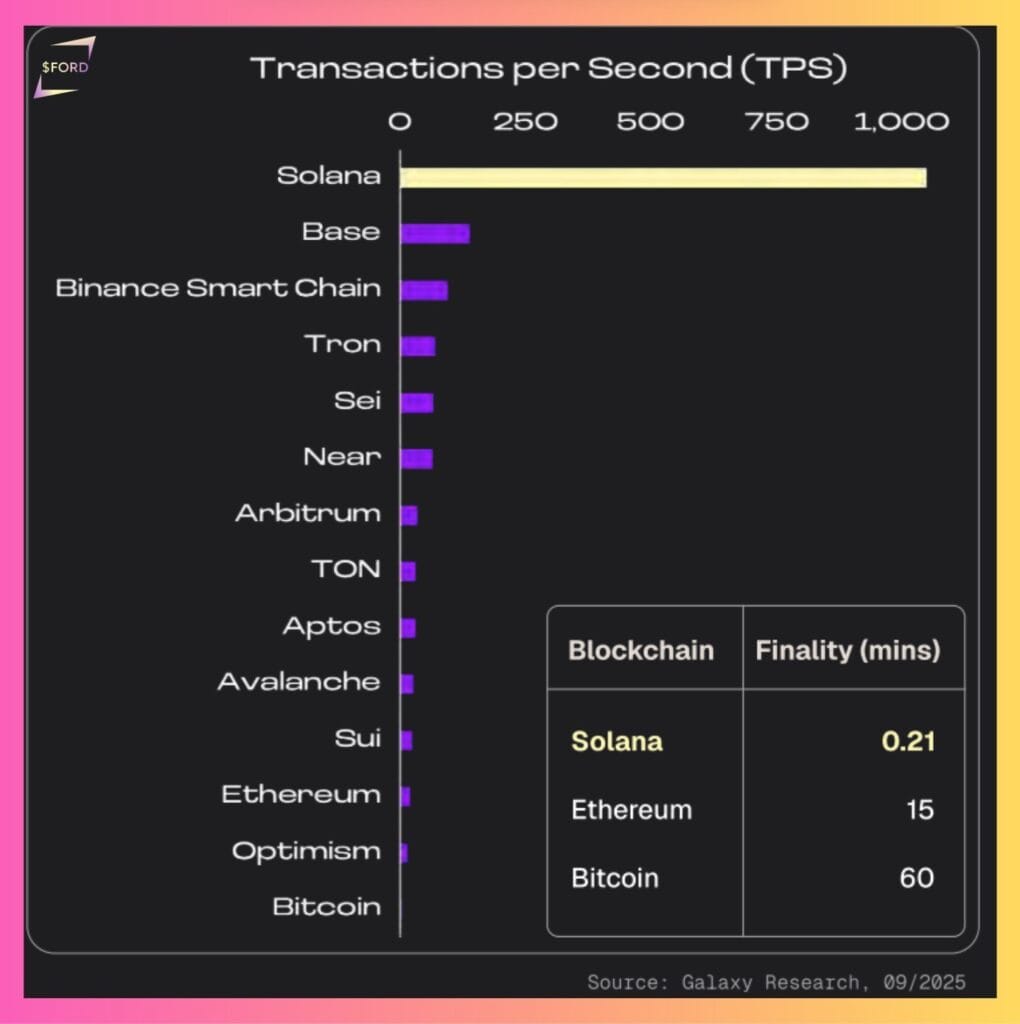
Solana Has The Most Transactions Per Second (TPS) On Any Blockchain
Source: X (@solana_daily)
Alpenglow is a major upgrade to Solana’s consensus and networking protocols, aimed at improving speed, efficiency, and decentralization.
The full rollout is expected by late 2025, coinciding with the launch of the Firedancer validator client.
Transaction finality will drop to approximately 150 milliseconds, offering near-instant user experiences.
Yes. With features like off-chain voting and validator admission tickets, Alpenglow lowers barriers to entry, enabling broader participation.
Yes, but the changes are designed to simplify validator operations and reduce ongoing costs.