The WazirX restructuring plan was re-approved by 95% of voting creditors after a prior rejection from the Singapore High Court.
The $234 million hack in July 2024 forced WazirX to halt operations and seek a legal pathway to compensate users.
The revised plan includes oversight from Zanmai India, improving regulatory alignment with Indian authorities.
Recovery tokens will continue to be used for user compensation, backed by WazirX profits and recovered assets.
Depending on court approval, compensation could begin in as little as 10 days or take up to 3 months.
In mid-July 2024, WazirX, one of India’s largest crypto exchanges, suffered a catastrophic breach when hackers compromised a Safe Multisig wallet.
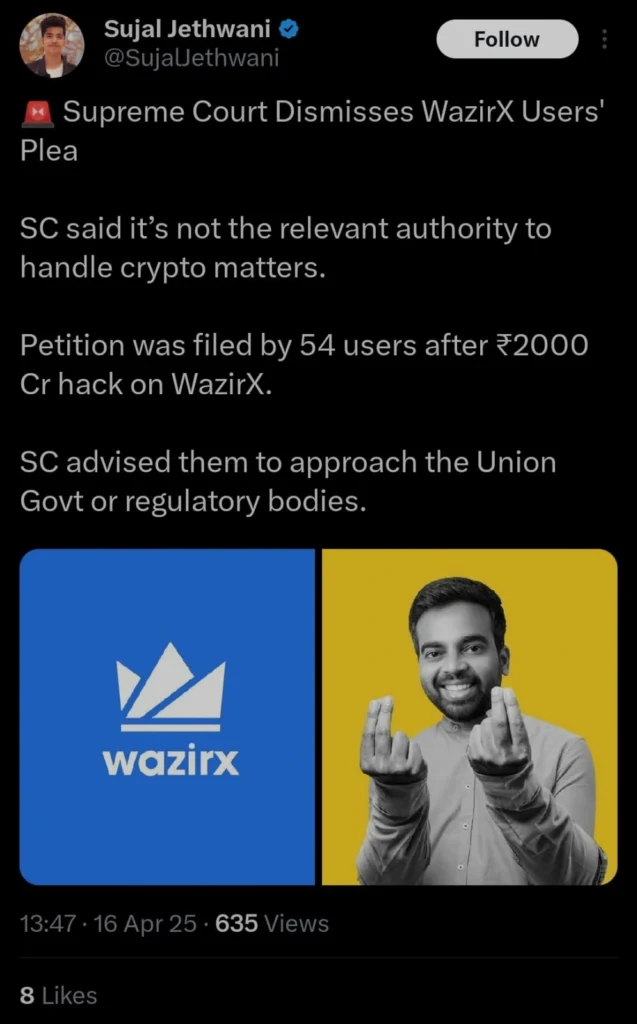
Source: X (@SujalJethwani)
The attack resulted in a loss of $234 million in digital assets and has since been linked to North Korean state-sponsored cyber attackers.
WazirX responded by halting all crypto and INR withdrawals on its platform. The priority quickly shifted toward designing a legal and operational framework to repay affected users and resume platform functionality.
From July 30th to August 6th, 2025, nearly 150,000 creditors representing over $206 million of the affected funds cast their vote on a revised WazirX restructuring plan.
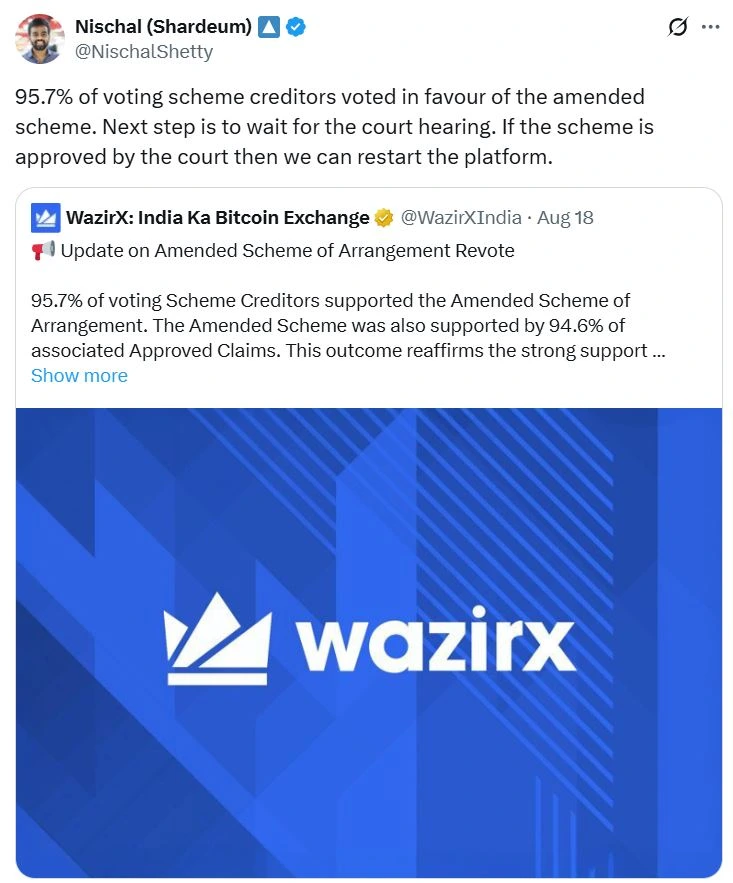
Source: X (@NischalShetty)
A staggering 95% of users approved the updated proposal, demonstrating strong support for moving forward despite past delays.
A key change is the transfer of compensation responsibilities from the Singapore-based parent company Zettai to Zanmai India, which operates under the jurisdiction of India’s Financial Intelligence Unit (FIU).
This shift was made to meet regulatory requirements and sidestep Singapore’s crackdown on crypto services for overseas clients.
While the tokens remain part of the compensation plan, the process of repurchasing them will now be managed from India. Users will receive ongoing distributions based on WazirX’s future profits and any assets recovered from the hack.
To ensure continuity of services outside India, WazirX’s parent company has also created Zensui Corporation, a new entity based in Panama. This move is part of the overall strategy to adapt operations for global regulatory environments.
In April, users had initially approved a WazirX restructuring plan designed to issue recovery tokens to users. These tokens were intended to represent unreturned funds and would be repurchased gradually through WazirX’s profits and recovered assets.
Despite majority approval from users, the Singapore High Court blocked the plan, citing regulatory concerns. The core issue was the uncertain legal status of the recovery tokens under new rules for digital token service providers operating in Singapore.
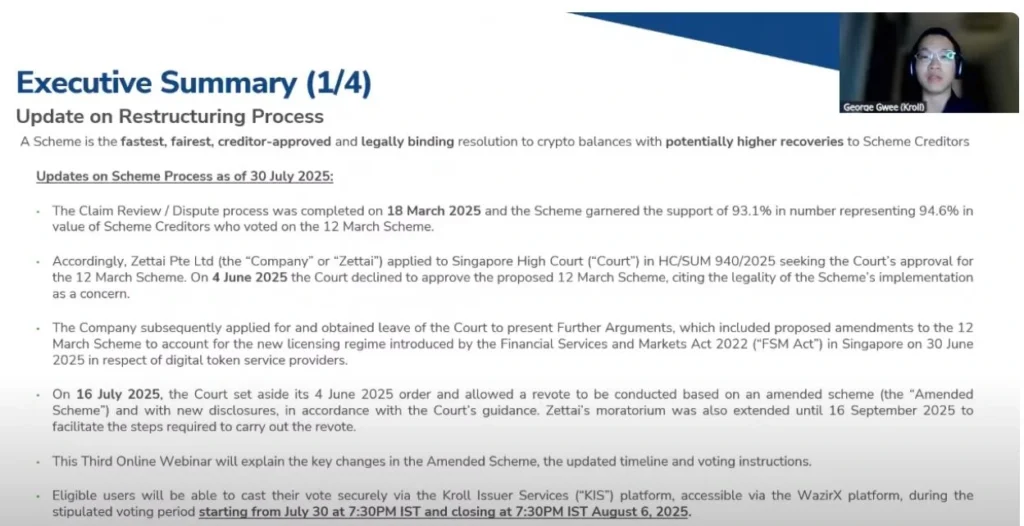
WazirX Customers Previously Approved A Proposal, However The Singapore High Court Rejected It
Source: YouTube
According to WazirX founder Nischal Shetty, users could start receiving compensation within 10 days of the scheme going into effect, pending court approval.
However, Kroll’s George Gwee, who is overseeing the restructuring, offered a more conservative estimate: two to three months after approval.
WazirX has warned users that without an approved plan, the process of liquidating assets and resolving legal claims could stretch as far as 2030, making the restructuring plan the fastest path to recovery.
While many users supported the plan in hopes of ending the long saga, others remain skeptical. Common concerns include:
The slow compensation timeline
The legal ambiguity surrounding the recovery tokens
The impact on holders of unhacked assets that have increased in value
In April 2025, a group of 54 victims filed a petition with the Supreme Court of India, seeking action against WazirX. The court dismissed the case, stating it had no authority over national crypto policy.
The WazirX restructuring plan is a recovery initiative aimed at repaying users affected by the 2024 hack. It involves issuing recovery tokens that track user claims and are funded by WazirX’s future profits.
The Singapore High Court rejected the first version of the plan due to regulatory concerns over how recovery tokens would be treated under new digital asset laws.
The revised plan shifts compensation management to Zanmai India, under Indian regulatory jurisdiction, and includes a new corporate entity in Panama for global operations.
Depending on legal approvals, users may begin receiving partial repayments within 10 days to 3 months after the plan goes into effect.
A previous case in India’s Supreme Court was dismissed, and no further official legal action has been confirmed as of now.