A solo Bitcoin miner solved block 920,440, earning approximately $347,455 in total rewards.
The miner operated through Public Pool and ran their own solo mining pool via Umbrel.
The event demonstrates the self-sovereign and decentralized spirit of Bitcoin mining.
Affordable, open-source Bitcoin miners are making it easier for individuals to join the network.
Each solo win strengthens Bitcoin’s decentralization by reducing reliance on large mining farms.
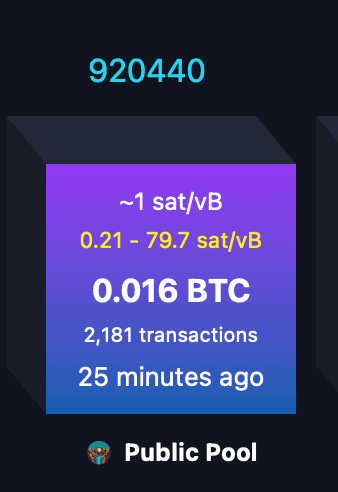
On Thursday at 7:32 PM UTC, block 920,440 was solved by a single Bitcoin miner operating through the Public Pool mining pool.
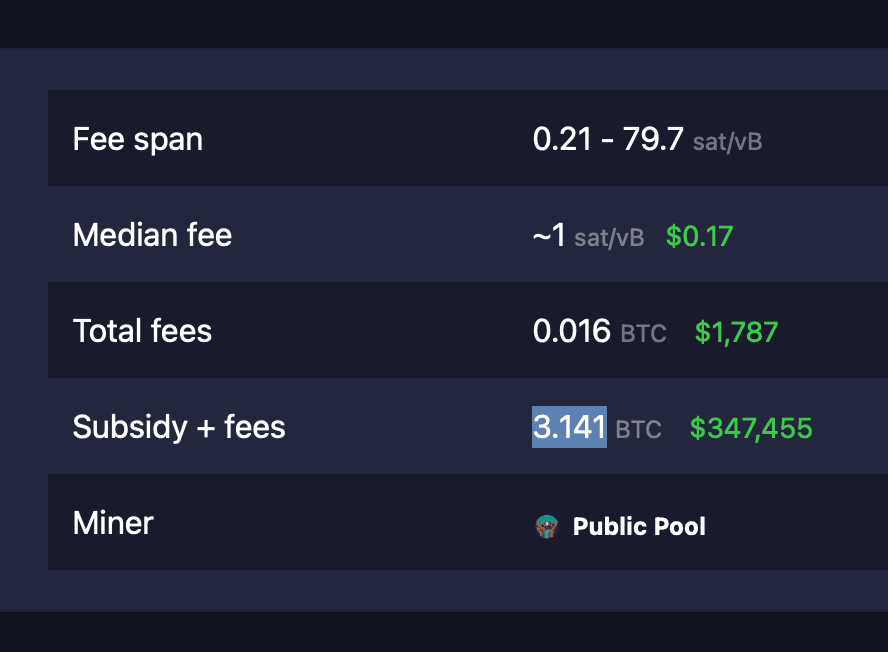
According to Mempool.space, the miner received the standard 3.125 BTC block reward, along with an additional 0.016 BTC in transaction fees, totaling roughly $347,455 at Bitcoin’s market price of around $111,299 per BTC.
Source: Mempool
The impressive part? This miner wasn’t part of a massive mining collective or industrial operation. Instead, they ran a solo mining pool on their own setup, demonstrating what many in the crypto space call “pure self-sovereignty.”
While solo wins like this are rare, they serve an important purpose in the Bitcoin ecosystem.
Every time an independent Bitcoin miner solves a block, it reinforces Bitcoin’s decentralized nature, ensuring that not only large corporations and industrial miners dominate the network.
Large-scale mining farms, many of which are publicly traded, control significant portions of the global hash rate. Solo miners, on the other hand, rely on smaller, often home-based setups.
Wins like this give smaller participants hope, showing that individual miners still have a fighting chance to earn block rewards despite the odds.
The solo miner’s success comes amid a growing trend toward smaller and more affordable Bitcoin miners.
Devices such as Bitaxes and similar compact machines can be purchased for as little as $155, going up to around $600, depending on their terahash-per-second (TH/s) capacity.
These pocket-sized miners may not contribute much to the total Bitcoin hashrate individually, but collectively they represent a movement toward open-source and transparent mining practices.
One of the challenges in the mining industry is the dominance of closed-source ASICs, specialized machines that are often tightly controlled by major manufacturers. In response, some companies are open-sourcing their mining hardware designs to promote accessibility and transparency.
A few years ago, a BitMaker spokesperson stated that these open-source initiatives aim to “fight the secrecy and exclusivity” that surround large-scale mining operations.
This philosophy aligns perfectly with the spirit of the recent solo mining win, empowering individuals to take part in Bitcoin’s decentralized future without relying on intermediaries.
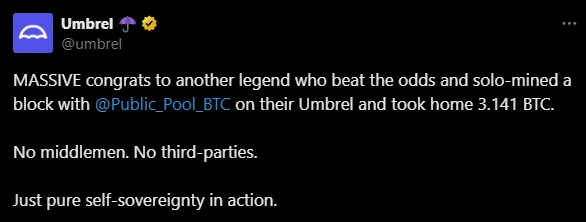
Bitcoin node infrastructure provider Umbrel celebrated the event on social media, calling it a perfect example of what Bitcoin stands for.
Source: X (@umbrel)
Meanwhile, the Bitcoin Bazaar X account added:
“A solo block has been mined by a solominer, mining on his own pool hosted on an Umbrel Server. Total sovereignty. We need more of this.”
This latest solo mining success story serves as a reminder of what Bitcoin mining truly represents. Running a node, securing your own keys, and independently contributing to the blockchain are all parts of Bitcoin’s self-sovereign ethos.
In a world where most mining is industrialized and centralized, solo miners like this one serve as symbols of Bitcoin’s original vision, a network owned and operated by its users, not corporations.
Solo Bitcoin mining means using your own hardware and node to solve blocks without joining a collective mining pool. If your miner finds a valid block, you receive the full block reward and transaction fees.
Not usually — the odds of finding a block alone are extremely low. However, as seen in this case, a successful solo miner can earn a massive payout.
Solo miners can use ASIC machines or smaller open-source miners like Bitaxes. Many operate their setups using Umbrel servers to maintain full control of their nodes.
Decentralization ensures that no single entity or organization controls the Bitcoin network. It keeps the blockchain secure, censorship-resistant, and true to its founding principles.