AI-fueled scams have caused £629 million in fraud losses in the UK during the first half of 2025.
Deepfake videos and AI-generated profiles are increasingly used to deceive victims in both investment and romance scams.
Banks are using AI-powered fraud detection systems to identify and block fraudulent transactions in real time.
The fight against AI-driven crime is ongoing, requiring collaboration between banks, police, and cybersecurity experts.
AI has given criminals the tools to create highly realistic fake messages, emails, and videos that mimic trusted companies and public figures.
These scams can reach thousands of victims at once with minimal effort. Fraudsters now use AI voice cloning, image generation, and translation tools to make their operations seamless and believable.
Deepfake technology, in particular, has become a favorite tool among scammers. They produce AI-generated videos of celebrities endorsing fake cryptocurrency or investment opportunities.

Source: X (@TrueMELANIAmeme)
In fact, each victim reportedly loses an average of $15,000, with total losses jumping 55% in just six months, nearly £100 million gone.
Even those aware of AI-fueled scams struggle to distinguish fake content from reality. Scammers often build professional-looking fake websites that mirror legitimate investment platforms.
Victims can open accounts, monitor fake “profits,” and even withdraw small amounts at first, giving a false sense of trust. Once confidence is established, larger investments are encouraged, and then the site vanishes along with the victim’s money.
AI-fueled scams aren’t limited to finance, they’re also reshaping romance fraud. Criminals now deploy AI-generated profiles and chatbots that sound compassionate, intelligent, and genuinely interested.
These fake personas spend weeks or even months chatting with victims on dating apps and social media platforms, fabricating stories to gain emotional trust.
Once an emotional connection forms, the requests for money begin, often disguised as urgent medical bills, travel expenses, or family emergencies. Victims typically start by sending small amounts, gradually increasing their transfers as the relationship deepens.
According to UK Finance, romance fraud cases rose 19%, with total losses climbing 35% to £20.5 million in the first half of the year.
Traditional fraud detection methods are no longer enough. To counter AI-fueled scams, UK banks have implemented AI-driven fraud prevention systems capable of analyzing spending patterns in real time.
These systems learn each customer’s behavior and can instantly flag suspicious activity, such as large transfers to new or overseas accounts.
UK Finance reports that these measures have already helped block £870 million worth of unauthorized fraud in six months, a 20% improvement over last year.
For every £1 criminals tried to steal, banks managed to stop 70 pence before it reached the fraudsters.
Ruth Ray, Director of Fraud Policy at UK Finance, confirmed that financial institutions are now investing heavily in AI because of its speed, accuracy, and adaptability.
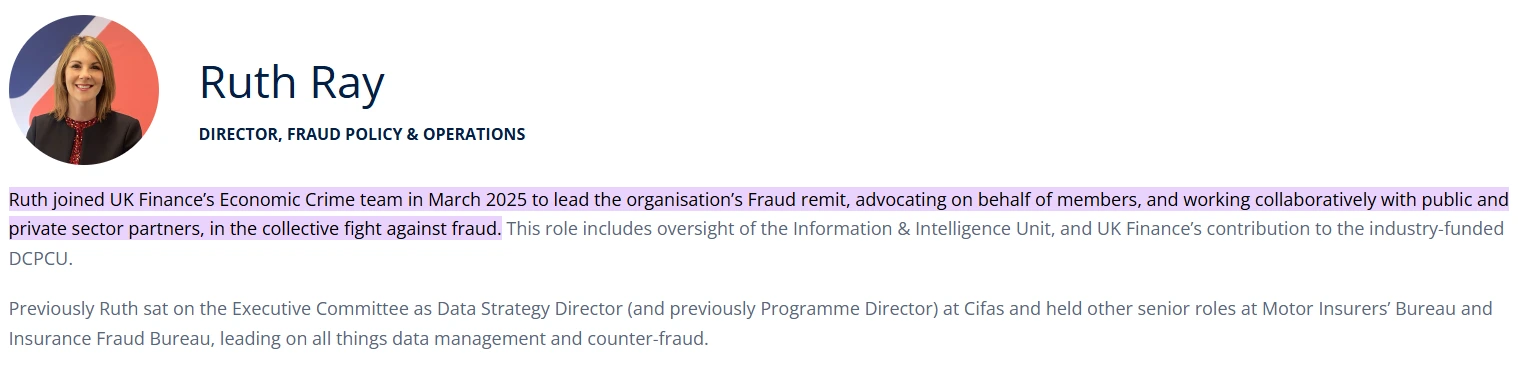
Source: UK Finance
These intelligent systems can detect anomalies, such as sudden overseas purchases or unusual spending patterns, and automatically pause suspicious transactions until the customer verifies them.
Additionally, the Dedicated Crime and Payment Card Unit (DCPCU), a police team funded by UK banks, has intensified its crackdown on digital fraud.
Investigators are targeting “SMS blasters”, devices that send thousands of fake messages to trick people into clicking malicious links that expose their personal and banking details.
An AI-fueled scam uses artificial intelligence tools—like deepfake videos, chatbots, and voice cloning—to create realistic and personalized fraud schemes that deceive victims more effectively.
Watch for inconsistencies in speech or visuals, double-check URLs, and verify the legitimacy of any investment or communication directly with the company. Be especially cautious of unsolicited messages, even from familiar-looking accounts.
Immediately contact your bank, report the fraud to Action Fraud UK, and change your passwords. The faster you act, the better the chance of minimizing financial loss.
Yes. UK banks now rely on advanced AI systems that monitor customer activity in real time and automatically flag or block suspicious transactions before money leaves the account.

 Skip to content