
Australia has removed over 14,000 online scams since July 2023, with 3,000+ involving crypto.
Crypto online scams now make up 21% of all takedowns by ASIC.
Scam losses from crypto worldwide hit $2.47 billion in just the first half of 2025.
Investment scams remain the top category but are declining in volume and value.
Crypto ATMs are increasingly under scrutiny due to links with scam activity.
ASIC’s aggressive scam disruption strategy, launched in mid-2023, includes powerful new takedown capabilities. The regulator now refers suspicious websites to third-party cybercrime experts for investigation and removal.
This includes fake crypto investment platforms, phishing sites, and fraudulent social media ads.
According to ASIC Deputy Chair Sarah Court, the agency is also now targeting misleading social media advertisements that promote fake crypto schemes.
Source: ASIC
In 2024, ASIC averaged 140 scam takedowns per week, but that figure has dropped slightly in 2025 to about 130 per week.
Despite the drop, the quality and complexity of these scams, especially those involving crypto, have become more sophisticated.
Common tactics include:
Fake AI-powered trading bots
Deepfake videos with celebrity endorsements
Fraudulent news websites imitating legitimate sources
Crypto hacks, scams, and exploits have already resulted in $2.47 billion in losses in the first half of 2025, a slight increase from $2.4 billion in 2024.
These figures highlight the growing impact of crypto online scams worldwide.
The National Anti-Scam Centre reports that Australians have lost over $73 million to investment scams in 2025 alone. However, this marks a declining trend, down from $192 million in 2024 and $291 million in 2023.
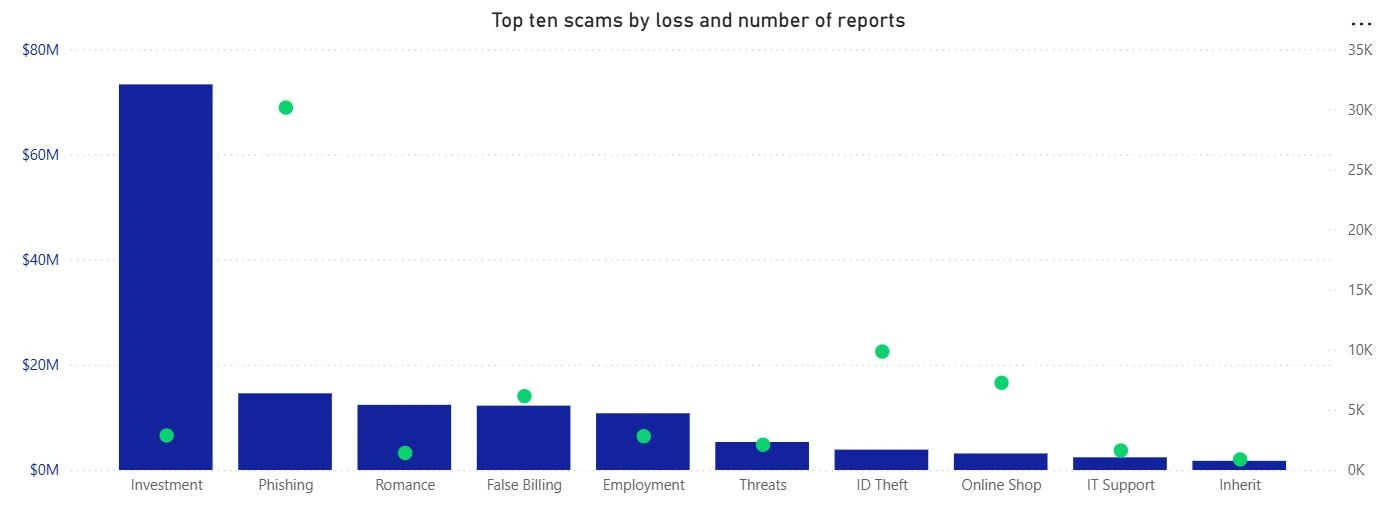
The Overall Amount Australians Have Lost To Investment-Oriented Scams
Source: National Anti-Scam Centre
ASIC credits this progress to improved coordination between agencies and ongoing public awareness campaigns. Still, Court warns that scammers are evolving rapidly:
“Scammers are adopting the latest technology to dupe victims. While we’re making progress, we urge Australians to stay vigilant.”
Crypto ATMs have come under increased surveillance by AUSTRAC and the Australian Federal Police (AFP).
In early 2025, authorities launched a nationwide investigation into the criminal use of these machines, including scams targeting victims through a tactic known as “pig butchering”.
Australia ranks third globally in the number of active crypto ATMs, with the number rising from 1,871 in June to 1,968 in August, according to Coin ATM Radar.
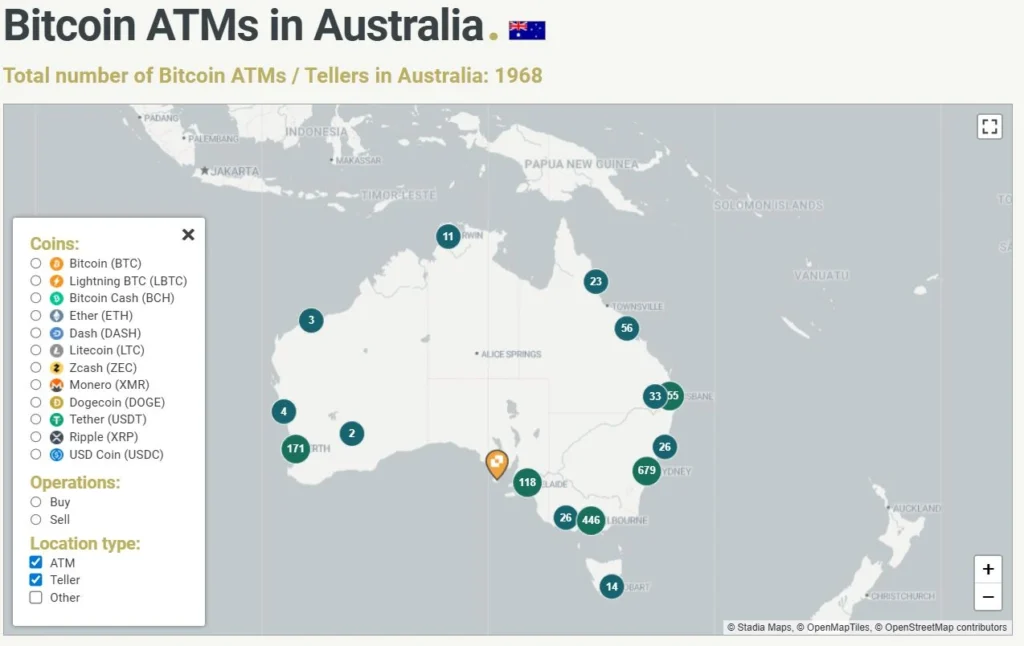
1,871 Australian Crypto ATMs Were Registered In June, Which Then Increased To 1,968 In August
Source: Coin ATM Radar
In June, AUSTRAC introduced new operating rules and transaction limits to curb scam activities.
Between January 2024 and January 2025, ReportCyber received 150 reports involving crypto ATMs, with losses exceeding $2 million USD.
ASIC advises Australians to approach all investment opportunities with caution, especially those involving:
Celebrity endorsements
Promises of guaranteed AI-powered returns
Offers made through apps like WhatsApp or Telegram
Consumers should also verify the legitimacy of any investment platform and report suspicious activity to Scamwatch or ReportCyber.
A crypto online scam is any fraudulent activity conducted over the internet that involves cryptocurrencies. This can include fake investment platforms, phishing schemes, or impersonation using AI-generated content.
Be wary of guaranteed returns, unsolicited messages, and testimonials that sound too good to be true. Always verify platforms and consult with licensed professionals.
Report the incident immediately to ReportCyber and Scamwatch. You should also contact your bank or financial institution.
While crypto ATMs are legal, they can be misused by scammers. Use only well-known providers and avoid making transactions under pressure or on behalf of someone else.