
The U.S. government is publishing economic data on-chain to improve transparency and accountability.
Chainlink and Pyth are the two oracle providers selected to handle data such as GDP and PCE indexes.
This marks a milestone for decentralized finance, opening up new opportunities in trading, risk management, and macro-level analytics.
The move could catalyze global adoption of blockchain-based transparency for public data.
Crypto markets responded positively, especially for PYTH and LINK tokens.
Chainlink, a leading decentralized oracle provider, has been chosen to deliver data directly from the Bureau of Economic Analysis (BEA) to the blockchain.
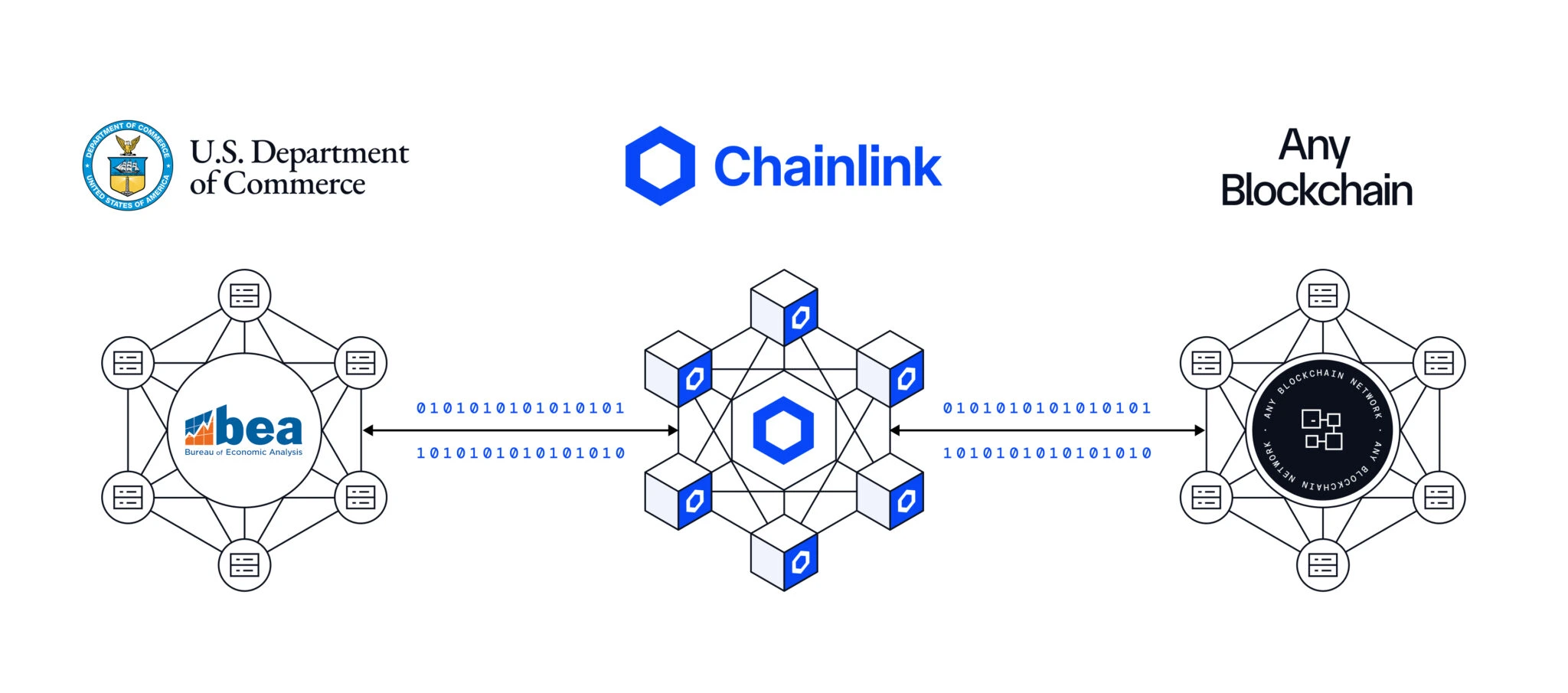
Source: Chainlink
According to a spokesperson, Chainlink will initially provide real-time access to:
Real Gross Domestic Product (GDP)
Personal Consumption Expenditures (PCE) Price Index
Real Final Sales to Private Domestic Purchasers
More data feeds are expected to roll out based on government directives or user demand.
The Pyth Network has also been tapped by the Department of Commerce to publish GDP data, a critical indicator of national economic performance.
This adds another layer of decentralization and accessibility for financial analysts, developers, and blockchain users.

Source: X (@PythNetwork)
Bringing economic data on-chain means that traditionally centralized datasets, like GDP and consumer spending metrics, are now accessible via decentralized networks.
This development has wide-reaching implications for both crypto markets and the future of public sector data management.
This shift is part of the U.S. government’s broader initiative, originally introduced during the Trump administration, to bring greater transparency to public spending.
The goal is to position the United States as a global leader in crypto adoption and blockchain innovation.
Other countries are taking note. Similar proposals to publish public economic data on-chain are gaining traction in:
The Philippines
The United Kingdom
A Chainlink representative noted that having economic data on-chain unlocks several opportunities for the crypto sector, including:
Automated trading strategies reacting to real-time data
Prediction markets tied to macroeconomic trends
Risk management tools for DeFi platforms
More accurate pricing for stablecoins, RWAs, and tokenized financial instruments
This level of data accessibility could fundamentally reshape how financial tools and markets interact within the Web3 ecosystem.
Following the announcement, the market responded quickly:
PYTH token surged nearly 70%
LINK token saw a 3% spike, before settling around $25
For context, LINK has climbed approximately 61% throughout August, moving from $15.43 to over $24 per token.
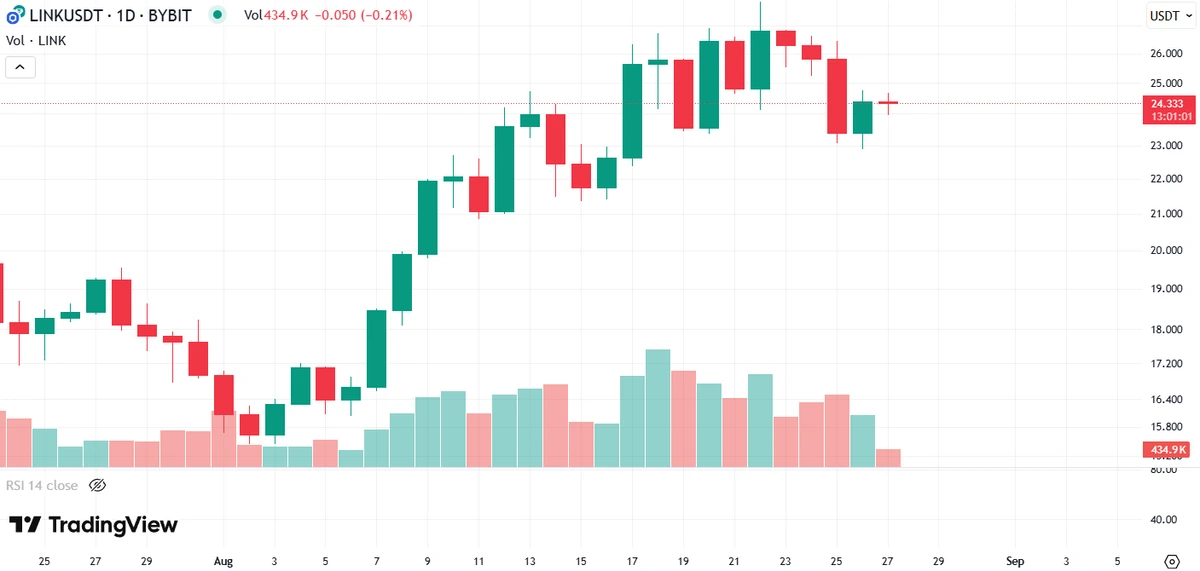
LINK/USD Daily Chart
Source: TradingView
Bringing economic data on-chain is about decentralizing access to vital financial information. Traditional systems gatekeep data, while on-chain infrastructure democratizes it, enabling:
Developers to build smarter contracts
Institutions to improve risk models
Investors to access macro data without intermediaries
Economic data on-chain refers to publishing official macroeconomic statistics, such as GDP, inflation, and consumer spending, on public blockchains using decentralized oracle networks.
Chainlink and Pyth Network are trusted oracle networks that securely bring off-chain data into blockchain environments. Their proven infrastructure makes them ideal for publishing sensitive government data.
Real-time access to on-chain economic data can improve algorithmic trading, enhance DeFi strategies, and create prediction markets that reflect real-world events, making crypto markets more efficient and dynamic.
The U.S. is among the first major economies to publish economic data on-chain, but countries like the Philippines, the UK, and El Salvador are exploring similar initiatives.

 Skip to content