AI agents are now central to modern game development, used in everything from code generation to real-time player interaction.
97% of developers believe AI is already reshaping the industry.
Smaller studios see AI as a way to level the playing field.
Developers are cautiously optimistic, balancing innovation with concerns around control and standards.
Human creativity remains vital, even as AI becomes more capable.
A global survey involving 615 developers from the U.S., South Korea, Finland, Norway, and Sweden reveals that 97% of developers believe AI agents are already changing the industry.
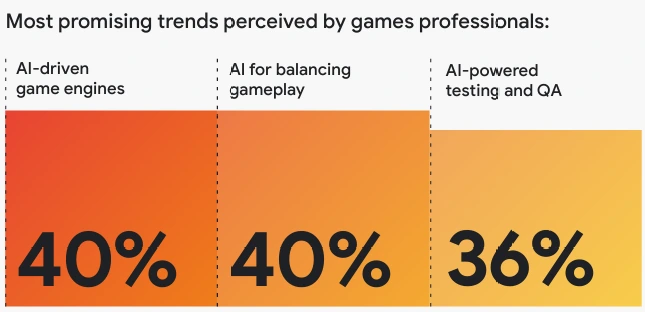
Source: Google Cloud
AI agents are autonomous programs capable of making decisions and taking actions without human input.
Unlike simple automation tools, these agents can adapt to changing scenarios, learn from data, and interact dynamically with players inside the game.
Game developers are increasingly using AI agents to:
Speed up coding and debugging
Automate playtesting
Streamline localization for global markets
These improvements are saving both time and money, especially for smaller studios trying to compete with AAA giants.
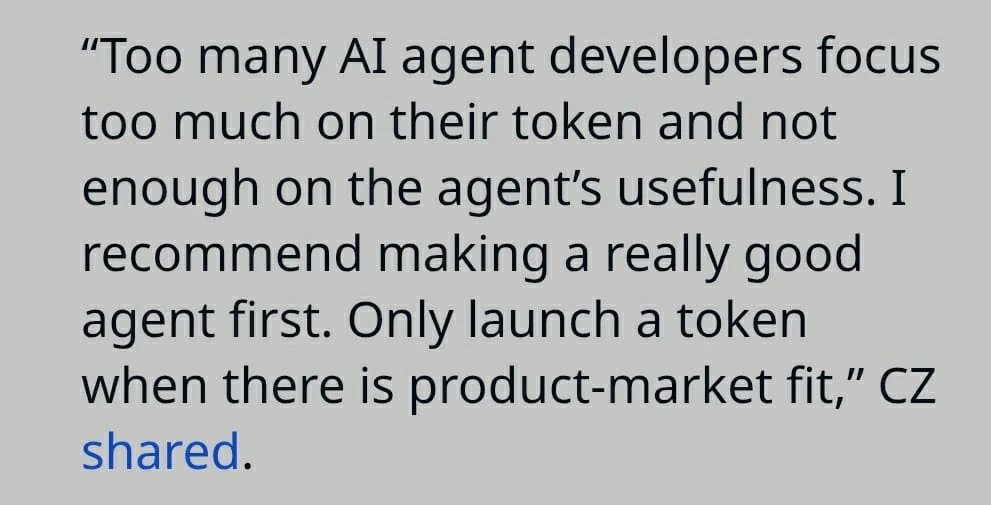
Still, not everyone is convinced. Changpeng Zhao, the former CEO of Binance, believes AI agents are essential provided that devs focus on their usefulness above all else:
Source: Changpeng Zhao
According to the survey, 87% of developers are using AI agents that adapt in real time to player behavior. Common implementations include:
Smart NPCs that learn from players’ actions
AI-powered tutorials that adjust based on skill level
Community moderation tools that detect toxic behavior
One high-profile example is Activision’s ToxMod, an AI tool that monitors in-game chat for hate speech and harassment.
Matias Rodriguez, CTO at Globant, noted:
“Gamers are a selective audience when it comes to authenticity. But they’re also very open to innovation when it improves immersion.”
For indie developers, AI agents are a great equalizer. About 29% of survey respondents said AI has lowered the barrier to entry, helping them match the capabilities of much larger teams.
On the flip side, many larger publishers are still grappling with legacy codebases and organizational inertia. Implementing AI at scale requires massive infrastructure changes and staff retraining.
While most developers are optimistic, they’re not without concerns. Common worries include:
Loss of creative control
Increased operational costs
Lack of industry standards
AI agents are autonomous systems that make decisions and take actions within a game without needing constant human oversight. They can drive characters, customize tutorials, or manage communities.
They lower the barrier to entry by automating complex tasks like playtesting, localization, and asset generation, allowing smaller teams to compete more effectively.
Generally, yes—especially when AI enhances immersion and gameplay. However, players are quick to notice when AI feels like a shortcut or dilutes authenticity.
No. AI agents are used as tools to enhance productivity and creativity, not replace human developers. Most successful implementations involve a human-AI collaboration.