HMRC sent 65,000 warning letters to crypto investors in 2024–25, more than double the previous year.
The UK tax authority has sent over 100,000 nudge letters in the last four years.
Around 7 million UK adults own crypto, making tax compliance a growing priority.
HMRC now receives exchange data and will gain automatic access to global data by 2026 via the OECD’s CARF.
Other countries, including the U.S. and South Korea, are also intensifying efforts to regulate crypto taxation.
According to a recent report by the Financial Times, HM Revenue & Customs (HMRC) issued nearly 65,000 “nudge” letters in the 2024–25 tax year.
This is more than double the 27,700 letters sent the previous year. The data was obtained via a Freedom of Information (FOI) request by UHY Hacker Young.
These letters are part of HMRC’s wider strategy to improve compliance among crypto asset holders. They are not formal investigations but are intended to prompt taxpayers to voluntarily amend their tax returns before enforcement action is taken.
Nudge letters are HMRC’s way of alerting individuals that their financial activity has raised red flags.
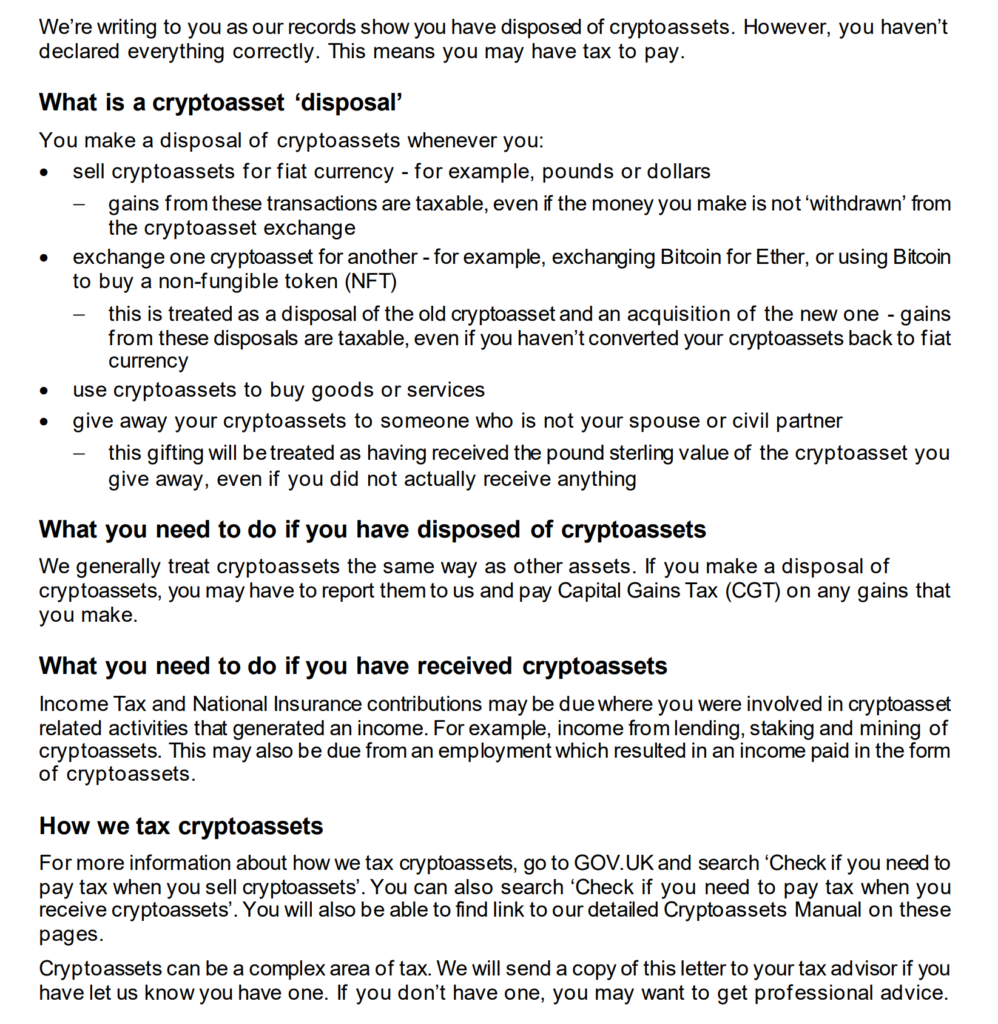
A Nudge Letter From 2024.
Source: kc-usercontent
They often advise recipients to review their tax filings and disclose any unreported capital gains, particularly from cryptocurrency transactions.
Over the past four years, the UK tax authority has sent over 100,000 nudge letters to individuals suspected of failing to properly report gains from crypto trading.
Neela Chauhan, partner at UHY Hacker Young, said:
“The tax rules surrounding crypto are quite complex, and many people don’t realise that converting one coin to another can still trigger a capital gains tax liability.”
One of the key drivers behind the surge in warning letters is HMRC’s enhanced visibility into crypto markets. The agency now receives transactional data directly from major exchanges, enabling it to detect discrepancies more easily.
Starting in 2026, HMRC will also benefit from the OECD’s Crypto-Asset Reporting Framework (CARF), which will grant automatic access to global exchange data.
This global information-sharing agreement will drastically improve the UK tax authority’s ability to track undeclared crypto assets across borders.
According to the Financial Conduct Authority (FCA), around seven million UK adults currently own crypto. This marks a sharp increase from 5 million in 2022 and just 2.2 million in 2021.
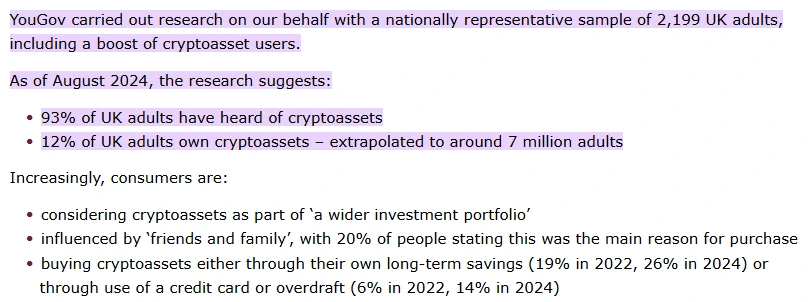
Source: FCA
This surge in ownership coincides with HMRC’s heightened scrutiny of the sector, particularly as digital asset prices rebound and trading activity increases.
The UK isn’t the only country stepping up its efforts to regulate and tax crypto assets.
In the U.S., lawmakers are considering new regulations that would exempt small crypto transactions from capital gains tax and provide clearer guidance on how staking rewards are treated.
Coinbase’s VP of Tax, Lawrence Zlatkin, has urged Congress to adopt a $300 de minimis exemption for everyday crypto payments.
Meanwhile, South Korea’s National Tax Service (NTS) is also intensifying its crypto tax crackdown, warning that even assets stored in cold wallets could be seized if linked to unpaid taxes.
The UK tax authority, HMRC, has ramped up its efforts by sending tens of thousands of “nudge” letters to individuals suspected of underreporting gains from cryptocurrency investments. These letters encourage taxpayers to correct their returns before facing audits or penalties.
Yes. In the UK, converting one cryptocurrency to another (e.g., Bitcoin to Ethereum) is considered a taxable event and may trigger capital gains tax, even if no fiat currency is involved.
HMRC now receives data directly from major cryptocurrency exchanges. Additionally, from 2026, it will have access to global crypto transaction data under the OECD’s new Crypto-Assets Reporting Framework.
If you receive a nudge letter from HMRC, it’s important to review your past crypto transactions and file any necessary corrections. Seeking advice from a tax professional is strongly recommended.
There is no limit on how much crypto you can own. However, you may be liable for Capital Gains Tax (CGT) if your total gains exceed the annual CGT allowance, which is currently £3,000 for the 2024–25 tax year (subject to change).