Vanilla Drainer is a new scam-as-a-service tool responsible for over $5.27 million in thefts in three weeks.
It has filled the void left by older services like Inferno Drainer, attracting many of its former users.
Vanilla typically takes a 15–20% cut of each successful scam, with smart contracts designed to evade detection.
The service actively rotates domains and contracts to stay ahead of security tools like Blockaid.
Vanilla was involved in 30%+ of phishing-related crypto thefts in July 2025, proving its growing market share.
Vanilla Drainer is part of a new generation of “drainer-as-a-service” tools. These malicious platforms provide fraudsters with the means to execute crypto phishing scams by draining victims’ wallets.
The drainer typically works alongside phishing websites that trick users into granting token approval permissions or signing malicious smart contracts.
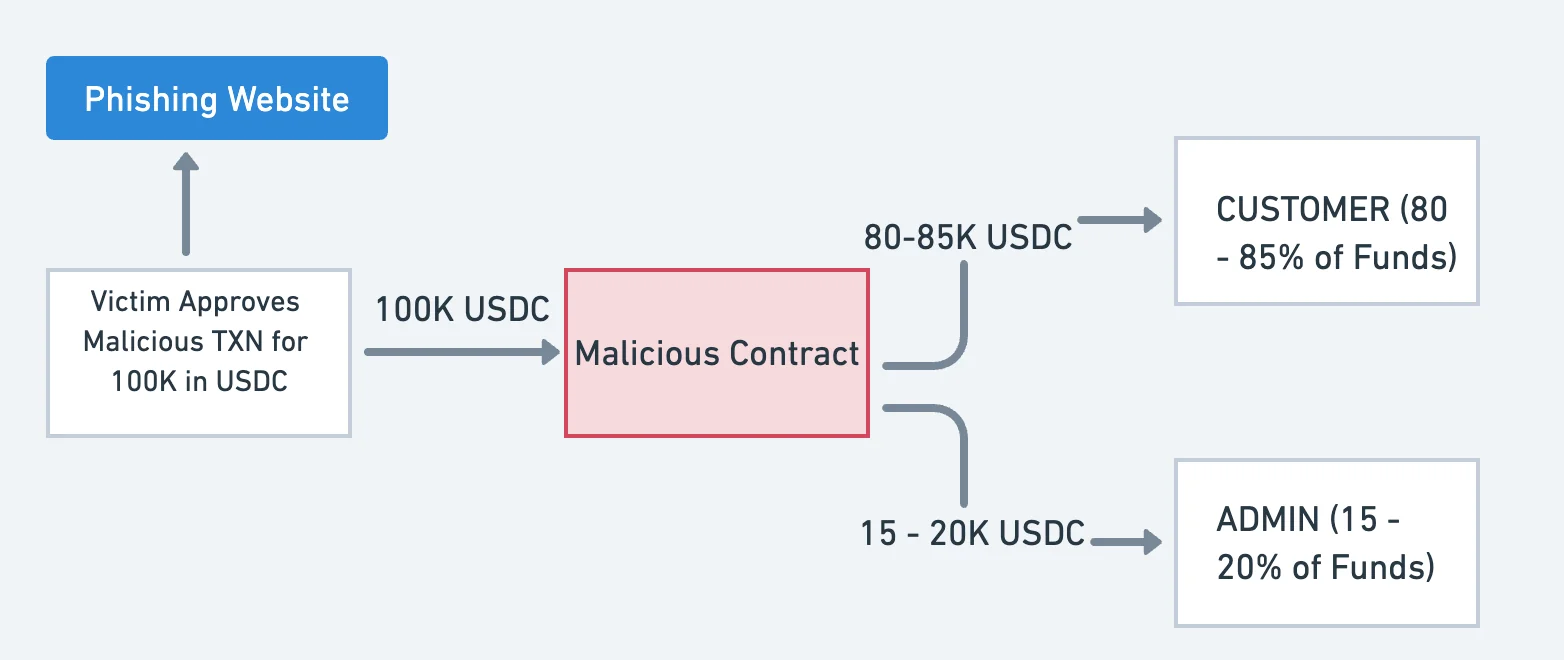
A Fund Flow Example Of A Vanilla Scam Trail
Source: Darkbit
According to blockchain investigator Darkbit, Vanilla is already replacing legacy drainers like Inferno and Angel. Darkbit states:
“Most of the large six- and seven-figure drains of late can be attributed to Vanilla Drainer.”
Vanilla Drainer operates under a typical scam-service business model: for each successful heist, the service takes a 15%–20% commission.
This is consistent with previous drainer operations like Inferno. In larger scams, the service fee may be reduced to incentivize continued usage.
On August 5th, a single user lost $3.09 million in stablecoins. Based on transaction trails, Vanilla’s operators received $463,000, approximately 17%, as their cut for enabling the scam.
Once funds are drained, they are usually swapped into native cryptocurrencies like Ethereum (ETH) and transferred to a dedicated fee wallet.
Investigators have tracked one such wallet accumulating $2.23 million, mainly in ETH and DAI, the latter chosen for its decentralized nature and resistance to freezing by authorities.
In 2024, draining scams peaked with losses nearing $500 million.
However, improved wallet security features, tools like Blockaid, and growing public awareness have caused a decline in successful attacks.Still, services like Vanilla are proving to be agile enough to adapt.
Vanilla Drainer’s advertisements first appeared in December 2024, boasting an “advanced algorithm” capable of bypassing Blockaid. This feature alone has likely contributed to its rapid adoption among cybercriminals.
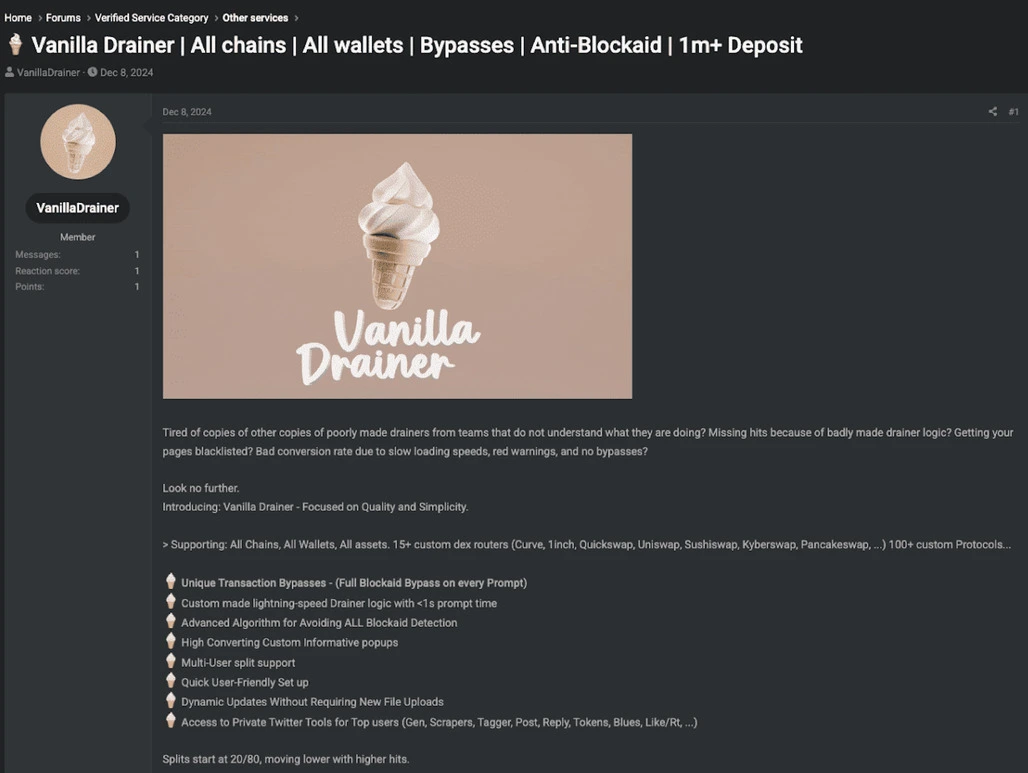
A Vanilla Drainer Ad Promising An “Advanced Algorithm” To Avoid Blockaid Detection
Source: Vanilla Drainer
Vanilla’s operators employ a crucial tactic to avoid detection: they continuously rotate domains and smart contracts, preventing security software from flagging known malicious addresses.
Darkbit notes:
“I’m starting to see fresh malicious contracts created for every malicious website and domain to avoid staying on the radar.”
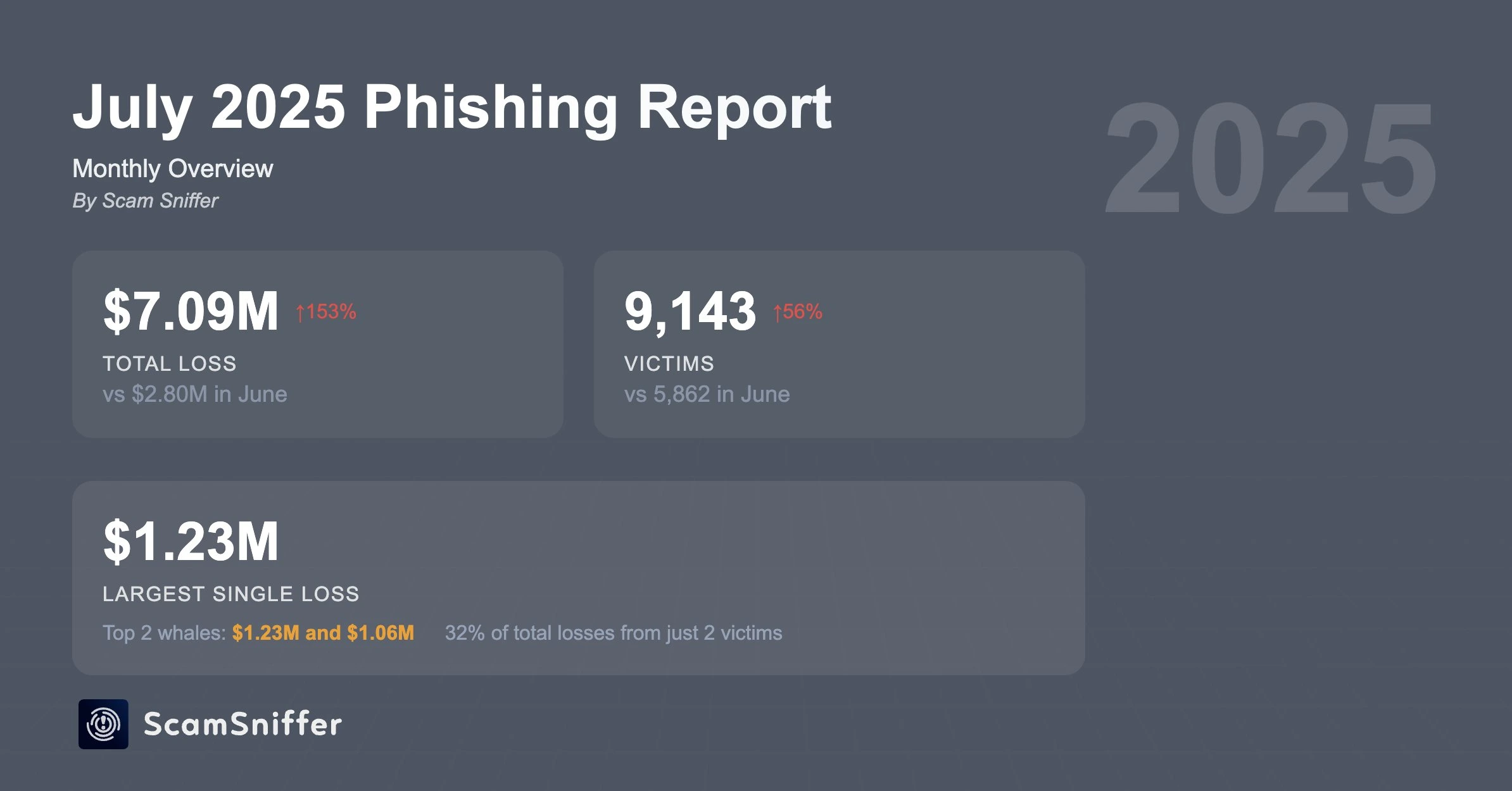
July 2025 saw a 153% increase in phishing-related losses, totaling $7.09 million. Among these, Vanilla Drainer was linked to at least $2.19 million, over 30% of the total.
The largest July incident saw a victim lose $1.23 million, with the scammer paying 54 ETH (~$204,074) to Vanilla Drainer as their fee. That ETH was later traced to the same wallet connected to the August $3 million theft, reinforcing the pattern of Vanilla’s involvement.
Source: ScamSniffer
Between July 15th and August 5th alone, Vanilla Drainer was responsible for four major heists totaling $5.27 million.
Despite a shrinking drainer ecosystem, the service is thriving, and even attracting previous users of now-defunct platforms like Inferno Drainer.
Inferno, for instance, announced its shutdown in November 2023, only to resurface in 2024 before merging into Angel Drainer. Yet activity linked to Inferno has continued into 2025, resulting in over $9 million in reported losses.
This proves that drainers rarely die, they rebrand, migrate, or evolve. Vanilla Drainer is the latest example of this grim reality.
Vanilla Drainer is a scam-as-a-service tool that enables cybercriminals to steal cryptocurrency through phishing tactics and malicious smart contracts. It is part of a new generation of drainers designed to evade detection.
As of August 2025, Vanilla Drainer has been linked to at least $5.27 million in stolen crypto funds across multiple incidents.
They work by offering phishing toolkits and scripts to fraudsters, taking a commission (usually 15%–20%) of the stolen assets. Scammers use these tools to trick victims into signing harmful transactions.
While tools like Blockaid and new wallet security features help, drainers continuously evolve. They often rotate domains, update code, and avoid detection — making permanent takedown difficult.
Never sign unknown transactions.
Use wallets that support transaction simulation.
Keep your software and browser extensions updated.
Avoid clicking suspicious links on social media or Discord.

 Skip to content