Centralized AI detectors are outdated, siloed, and easily bypassed by real-time deepfakes.
Crypto deepfake scams caused over $200 million in damages in Q1 2025 alone.
Criminals now use live AI impersonations to trick employees and exploit KYC.
Blockchain-enabled decentralized detection networks offer transparency, scalability, and higher real-world accuracy.
Regulatory bodies are already exploring decentralized tools as part of new authentication standards.
Centralized deepfake detectors are structurally flawed, siloed, and fundamentally outpaced by AI-driven scams.
Source: Resemble.AI
In an industry built on decentralization, it’s counterintuitive, and dangerous, to rely on closed-source, centralized models for fraud detection. The solution? Blockchain-powered, decentralized detection networks.
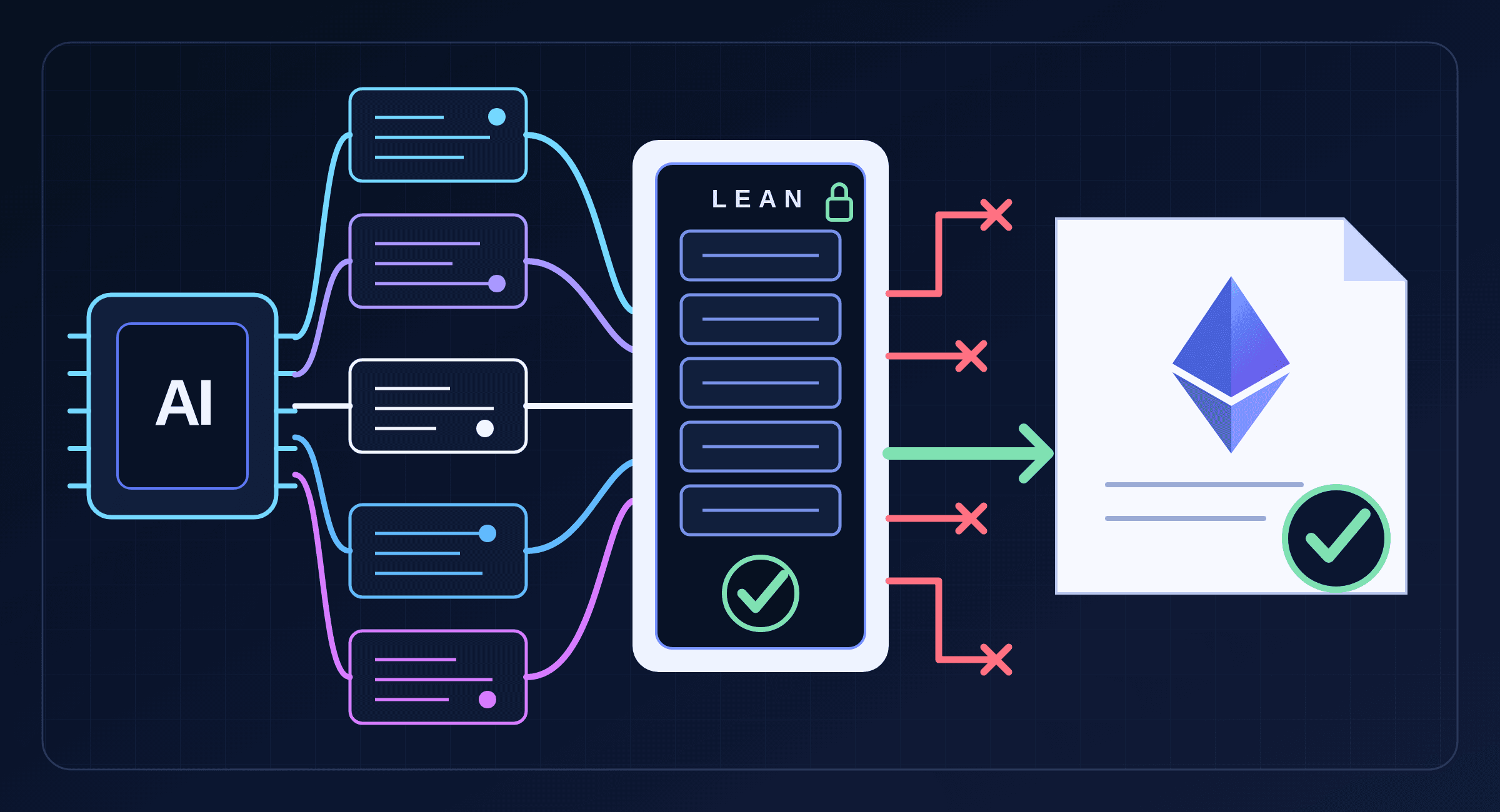
These networks incentivize independent AI developers to detect deepfakes and record their findings immutably on-chain, making results publicly auditable, composable, and interoperable across crypto platforms, wallets, and DeFi protocols.
In Q1 2025 alone, over $200 million was stolen through crypto deepfake scams, with AI-generated impersonations now responsible for more than 40% of high-value crypto fraud.
These scams are growing increasingly sophisticated. Criminals are leveraging real-time AI deepfakes to:
Impersonate executives in video calls
Trick employees into authorizing large transfers
Bypass KYC by generating fake biometric data
In one now-infamous case, a deepfake of Michael Saylor promoted fake Bitcoin giveaways via QR codes, prompting his team to remove 80+ AI-generated videos per day.
Similarly, Bitget CEO Gracy Chen noted how the speed and virality of synthetic video content gives scammers a dangerous edge.
The current architecture of centralized AI detection tools is obsolete.
Vendor lock-in: Most detection tools are best at identifying deepfakes generated by their own models, leaving blind spots for content from competing tools.
Conflict of interest: When companies create both generators and detectors, incentives become blurred.
Static learning: Centralized models are trained on past data, while scammers iterate in real-time. Even the best centralized detectors drop from 86% accuracy on controlled datasets to just 69% in real-world conditions, as reported in a March 2025 study.
Traditional methods cannot keep up. And relying on major tech firms to self-regulate is a dangerous gamble, especially when tools like Google’s SynthID only detect content generated by its Gemini model, ignoring others.
Across Asia, authorities dismantled 87 deepfake scam rings using AI to impersonate celebrities, tech founders, and government officials.
These aren’t static videos anymore. We’re now seeing live, dynamic impersonations on video calls, used to approve unauthorized transactions. These tactics bypass legacy detection, exploit human trust, and hit centralized exchanges the hardest.
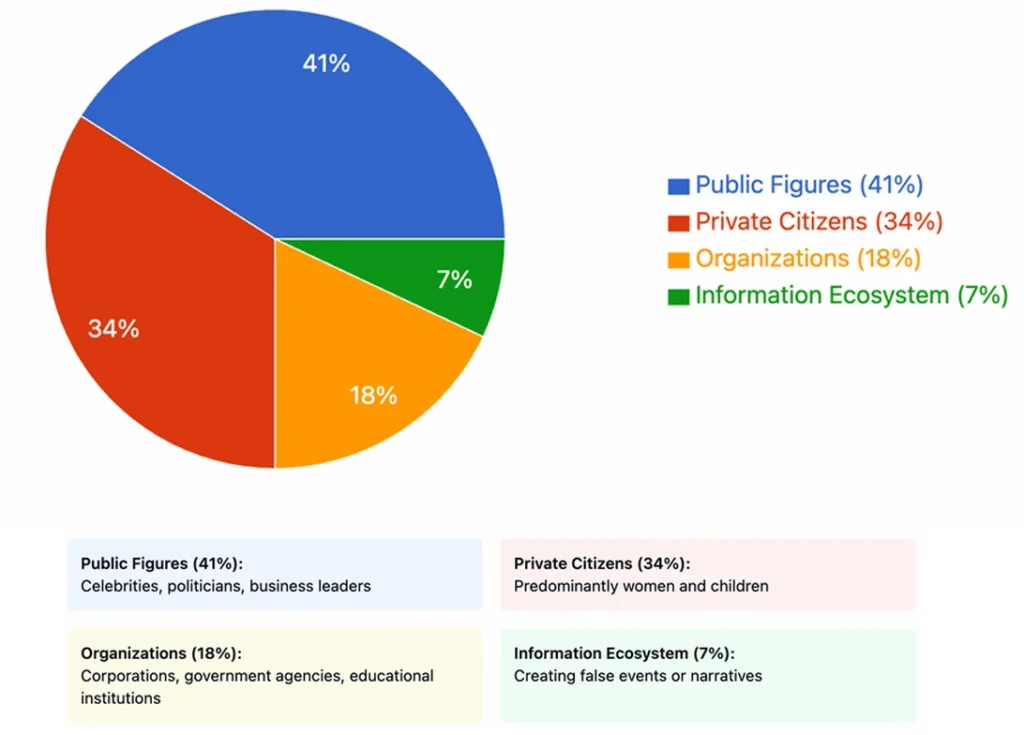
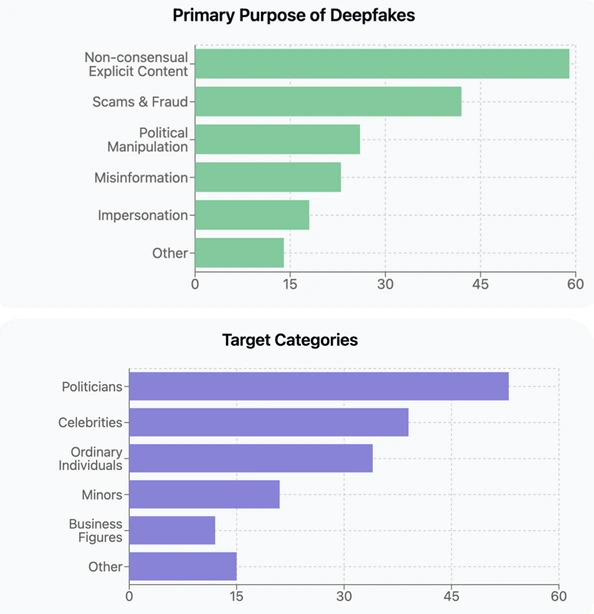
Different Demographics That Crypto Deepfake Scams Target
Source: Resemble.AI
Even more alarming are AI romance scams, where deepfakes and chatbots create fake emotional bonds to siphon funds from unsuspecting users. The convergence of AI, psychology, and crypto creates a potent threat vector.
Blockchain’s core promise, trustless, transparent verification, makes it uniquely suited to defend against crypto deepfake scams.
A decentralized detection network distributes verification across thousands of nodes, similar to how Bitcoin solved the double-spend problem.
Here’s how it works:
Model providers compete to detect deepfakes
Incentive structures reward accurate detection
Results are stored on-chain for public verification
APIs enable real-time integration with exchanges, wallets, and DeFi protocols
This approach is inherently more adaptable and secure. It aligns with Web3 principles and performs significantly better on real-world deepfakes than traditional models.
The generative AI market is expected to reach $1.3 trillion by 2032. Without scalable, on-chain verification, deepfake scams could account for 70% of crypto crimes by 2026.
Take the $11 million OKX account breach, executed through AI impersonation. This is just the beginning. As DeFi expands and more interactions occur in pseudonymous environments, traditional security will continue to erode.
Therefore, decentralized detection may very well be the only viable path forward.
A crypto deepfake scam uses AI-generated audio or video to impersonate real individuals—like crypto founders or executives—to trick users into making fraudulent transactions or revealing private keys.
Centralized detectors struggle because they often only detect content from their own AI models. They’re static, slow to update, and not incentivized to keep pace with evolving scam tactics.
Blockchain networks enable decentralized detection, where multiple independent AI models compete to identify deepfakes. Their findings are recorded on-chain, making the process transparent and tamper-proof.
Yes. Emerging platforms are already building decentralized detection networks that integrate with crypto apps, exchanges, and wallets—offering real-time verification of media content.
Regulators are increasingly demanding robust identity and fraud detection protocols. Decentralized detection systems provide auditable verification while preserving user privacy and permissionless access.