Hoarding Bitcoin slows adoption and weakens its role as a currency.
Spending Bitcoin encourages merchant support, regulatory clarity, and broader use.
Use two wallets: one for saving and one for spending.
Regulatory frameworks are shaped by how people use Bitcoin, not how they hold it.
Adoption won’t happen if everyone is waiting, it requires active participation now.
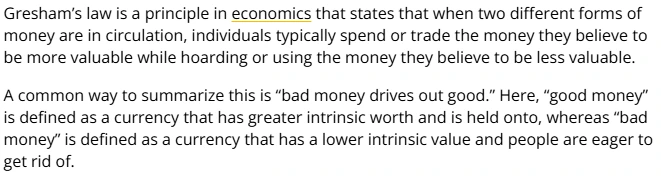
Many Bitcoiners cling to the mantra of “HODL” (Hold On For Dear Life) under the assumption that you should spend bad money (fiat) and save good money (Bitcoin).
Most investors’ interpretation of Gresham’s Law is flawed. In modern economies, where fiat currency isn’t physically competing with Bitcoin in the same transactional space, there’s no need to hoard Bitcoin at the expense of adoption.
Source: CoinTelegraph
In reality, when people treat Bitcoin solely as a long-term investment, it risks becoming just another digital gold, valuable, yes, but static and underutilized.
Saving is not inherently bad. Saving for a house or retirement using Bitcoin can be a sound financial strategy. But the problem lies in exclusively hoarding Bitcoin and never engaging in actual transactions.
Eventually, you’ll still need to convert Bitcoin into fiat to make major purchases, defeating the purpose of Bitcoin as money.
Spending Bitcoin does more than just facilitate a transaction. It:
Builds merchant confidence
Encourages infrastructure development
Enhances regulatory clarity
Boosts real-world utility
Every time you use Bitcoin to buy coffee or groceries, you’re voting for a decentralized financial system.
Merchants are often “orange-pilled” into accepting Bitcoin. But when no one actually spends Bitcoin, these same merchants abandon the option.
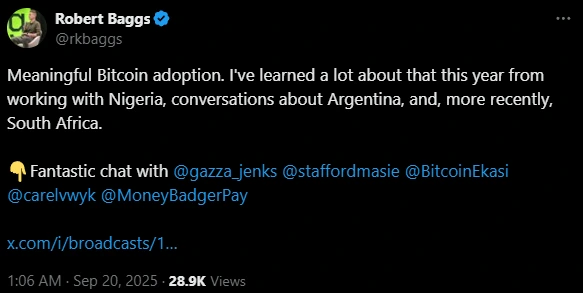
This happened with PayFast in South Africa, they supported Bitcoin for five years, then dropped it due to low usage. So, waiting for mass adoption while hoarding Bitcoin is like waiting for a garden to bloom without planting seeds.
Source: X (@rkbaggs)
When governments see Bitcoin only as a speculative asset, they’re more likely to classify it as a financial instrument, not currency. This adds layers of regulation and taxation, further discouraging use as real money.
In South Africa, for example, crypto is heavily regulated under financial asset laws, not payment systems—making everyday use complex and intimidating.
To balance saving and spending, use two separate wallets:
Savings Wallet: For long-term holdings
Spending Wallet: For daily transactions
This split also helps you manage taxes more easily by clearly distinguishing between long-term assets and day-to-day use.
Several platforms and wallet providers now offer rewards for spending Bitcoin. For example:
10% cashback in sats at South African retailer Pick’n Pay
Binance offering 50% back on QR code purchases
These incentives aim to normalize Bitcoin use in daily life.
Hoarding prevents Bitcoin from gaining traction as real money. If it’s never used, it will never replace fiat or achieve its intended purpose.
Absolutely. The best approach is to save some and spend some. This dual strategy strengthens Bitcoin’s utility while securing your investment.
Not necessarily. Small, regular transactions have long-term positive impacts, including growing the ecosystem and boosting merchant confidence.
Use automated crypto tax software and keep spending in a separate wallet. This makes reporting easier and reduces audit risk.