AI freelance work is far from replacing human freelancers—AI completed less than 3% of Upwork tasks in testing.
AI struggles with multi-step reasoning, real-world context, and accuracy in information.
Automated cover letters and applications are disrupting hiring quality, not improving it.
Overhyped claims, like AI causing 80% of ransomware attacks, show the need for critical thinking about AI’s true impact.
Human intuition, adaptability, and critical judgment remain irreplaceable in the freelance economy.
A study by Scale AI and the Center for AI Safety tested six popular AI models on 240 freelance projects sourced from Upwork. The projects spanned categories like writing, design, and data analysis.
The results were sobering: the best-performing model, Manus, successfully completed only 2.5% of the tasks, earning just $1,810 out of a potential $143,991 in project value. Other models such as Claude Sonnet and Grok 4 completed roughly 2.1% of tasks.
In short, AI tools can generate content, designs, or code snippets, but when projects require multi-step reasoning, initiative, or judgment, they fall short.
The research suggests that AI struggles to manage complex workflows, the kind that freelance professionals navigate daily.
Most AI freelance work tools rely on large language models (LLMs) like ChatGPT or Claude. These systems generate text by predicting patterns, not by understanding meaning.
Source: X (@paulnovosad)
That’s why they can sound confident yet produce errors or miss context. Until LLMs develop true reasoning and awareness, AI will remain a helpful assistant, not a full replacement for human freelancers.
AI models excel at pattern recognition and text prediction, but they still lack an internal “world model.” According to research from MIT and Basis Research, this means AI doesn’t truly understand environments or how to plan actions within them.
For example, a person can visualize their kitchen and know how to make a meal, where utensils are, how long water takes to boil, and what order to complete tasks in. AI can’t replicate that kind of situational understanding.
MIT’s WorldTest experiment found that human participants achieved near-optimal results on 129 reasoning and logic tasks across 43 simulated environments.
In contrast, even advanced AI systems failed frequently, showing that more computing power doesn’t necessarily lead to better understanding.
Beyond freelance tasks, AI systems also falter in real-world reporting.
Research by the BBC and European Broadcasting Union found that tools like ChatGPT, Gemini, and Copilot produced major factual errors nearly 45% of the time.
31% of AI-generated responses cited incorrect sources
20% included hallucinated or outdated information
Gemini performed worst, with major issues in 76% of answers
This lack of reliability underscores a major limitation: while AI can summarize or reword content efficiently, it often fails at accurate, contextual understanding, something crucial in journalism and client communication for freelancers.
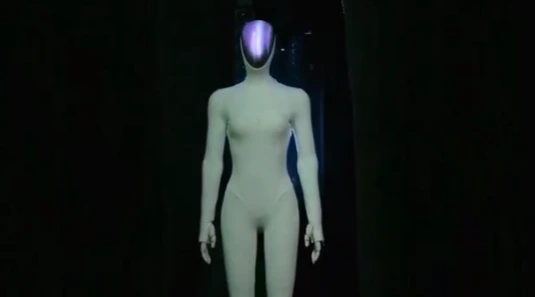
Chinese EV manufacturer XPeng has unveiled the XPeng Iron female robot, which bears a striking resemblance to a human. It has a similar spine movement to humans, and skin stretched over soft 3D lattice structures mimics the human body.
XPeng’s New Robot Is Due To Go Into Production Early Next Year
Source: XPeng
It’s due to go into production early next year, but the company says it requires too much compute for use in the home, so it’ll likely be used for commercial applications first, like introducing cars to customers at Xpeng stores.
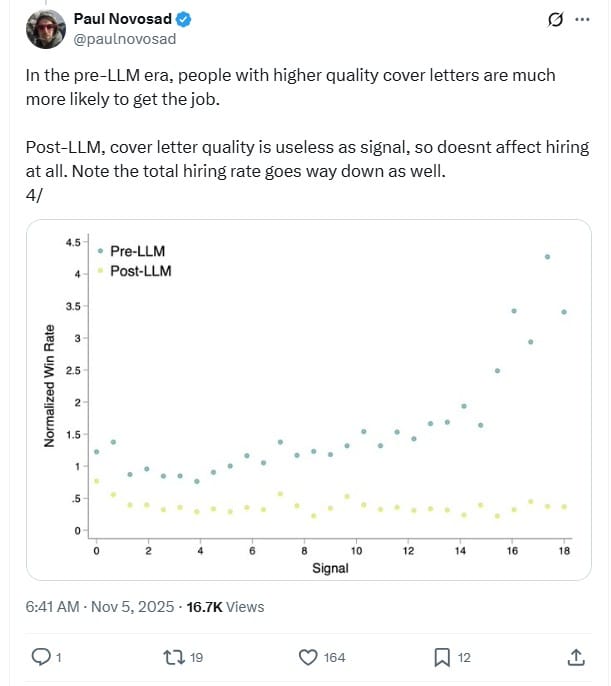
AI has also disrupted the freelance hiring process in unexpected ways. A study on Freelancer.com found that AI-generated cover letters, once designed to save time, are actually reducing hiring efficiency.
Before AI tools became mainstream, employers could distinguish thoughtful applications from generic ones. Now, with many applicants using AI-generated text, that signal is lost.
As a result, highly skilled freelancers are hired 19% less often, while less-qualified applicants are being hired 14% more frequently.
This suggests that AI freelance work may make hiring less reliable, not more efficient, as employers struggle to separate genuine skill from automated polish.
Another hot topic in AI research is cybersecurity. A paper from MIT Sloan and Safe Security claimed that 80% of ransomware attacks were “AI-driven.”
However, cybersecurity experts like Kevin Beaumont and Marcus Hutchins strongly disputed this, labeling the paper’s conclusions “jaw-droppingly bad.”
They argued that generative AI is not a core factor in modern ransomware attacks and that many cited examples, like Emotet and Conti, were defunct or misclassified. The takeaway? Not all claims about AI’s capabilities hold up under scrutiny.
Not yet. While AI can automate basic tasks such as summarizing text or creating templates, it struggles with creative direction, client communication, and multi-step projects that require human judgment.
AI performs best on well-defined, repetitive tasks, like proofreading, basic design generation, or data formatting. However, tasks that require nuance, adaptability, or originality remain human strengths.
Yes, as AI develops better reasoning and contextual understanding. But for now, human freelancers remain essential for most projects that require initiative and real-world awareness.