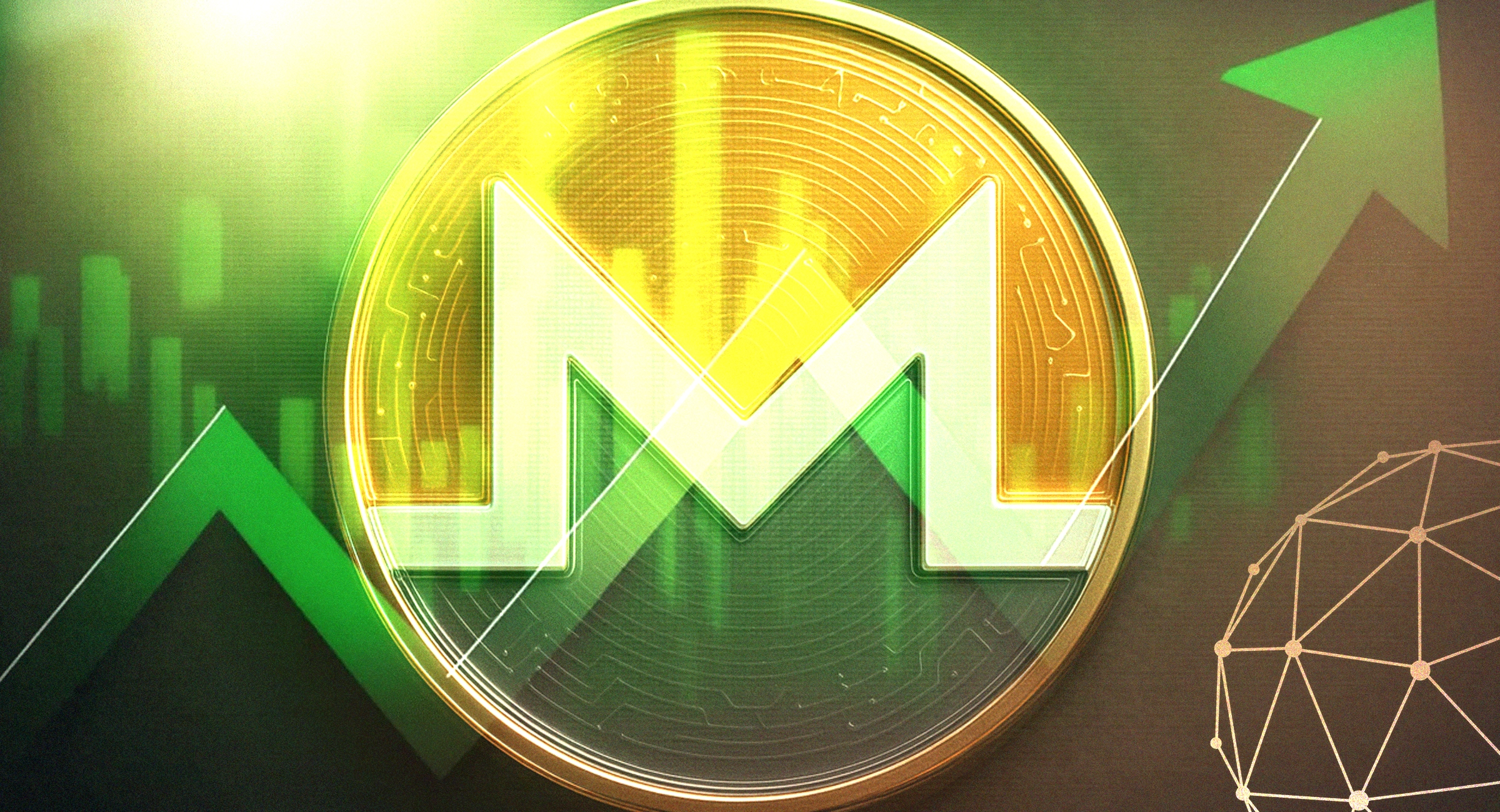
Monero (XMR) rose 7% shortly after suffering an 18-block reorg, the largest in its history.
The reorg reversed 117 transactions and was linked to Qubic, which controls over 51% of the network’s hash rate.
The Monero community is considering centralized DNS checkpoints to mitigate future attacks — a controversial move.
While Monero’s price prediction in the short term remains bullish, its long-term security hangs in the balance.
Future solutions like merge mining or ChainLocks are being discussed but not yet implemented.
On Sunday morning at approximately 5:12 AM UTC, Monero’s blockchain experienced an 18-block reorg starting at block height 3499659 and concluding at block 3499676 about 43 minutes later.

Source: X (@AvdiuSazan)
The reorg, reportedly orchestrated by Qubic, a Layer-1 AI-centric blockchain and mining pool, reversed around 117 transactions. This event was the second known attack by Qubic, which had already conducted a smaller six-block reorg last month after achieving a controversial 51% hashrate dominance over the Monero network.
Qubic’s growing mining power is being closely watched. Their control of more than half of Monero’s hash power has made the network vulnerable to 51% attacks, a scenario where one entity gains enough control to manipulate the blockchain’s integrity.
According to GitHub updates from cryptocurrency researcher Rucknium, the recent reorg was indeed carried out by Qubic and is being referred to as the largest reorg in Monero’s history.
Vini Barbosa, a popular crypto analyst, said on X.
“Personally, I don’t consider the Monero network reliable at this point. I’ll stop accepting XMR for payments until this situation is resolved.”
Despite the serious technical setback, Monero’s price (XMR) traded flat during the reorg and later saw a 7.4% rally, climbing from $287.54 to $308.55, according to data from CoinGecko.
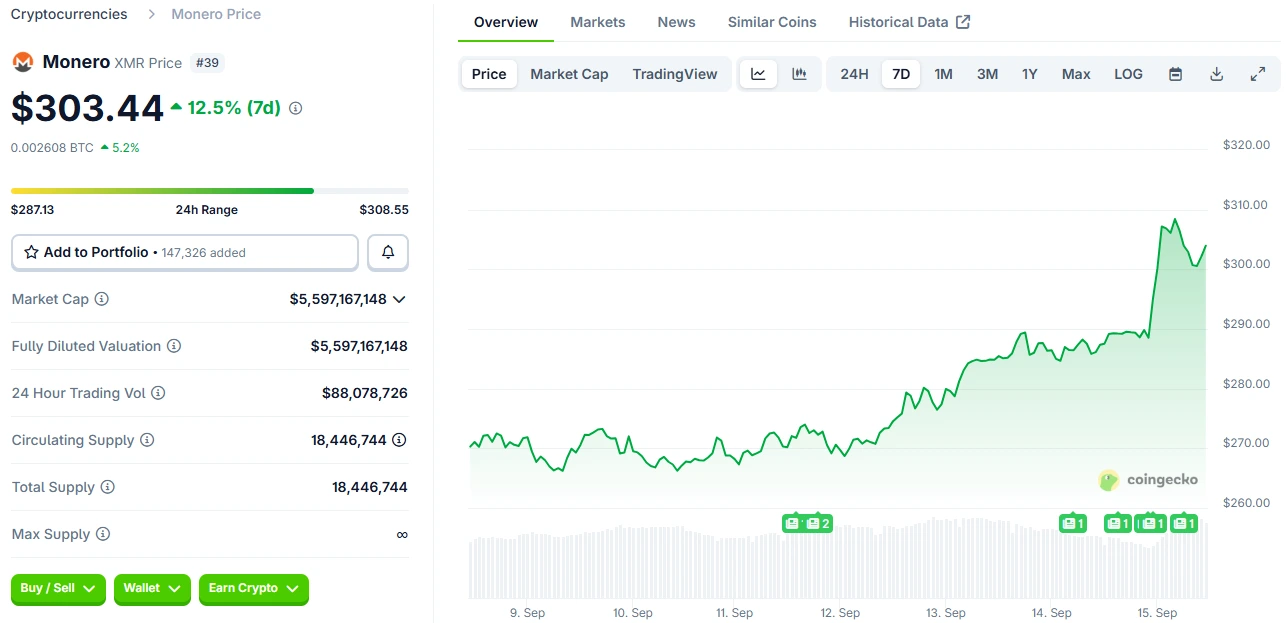
XMR’s Price Action
Source: CoinGecko
This movement occurred even as the broader crypto market experienced a 1% decline the same day.
Analysts believe the price movement could have been influenced by Qubic itself.
Crypto podcaster ‘xenu’, who was among the first to report the attack, speculated that the group may have tried to implement mechanisms to “stop the bleeding” of XMR’s price, possibly to maintain trust in the ecosystem despite the attack.
With Qubic’s growing control and ongoing attacks, the Monero community is now being forced to re-evaluate its commitment to decentralization.
Rucknium suggested that node operators might begin implementing Domain Name System (DNS) checkpoints, where nodes pull trusted block data from community-managed servers to avoid reorgs.
While effective in the short term, this solution adds a level of centralization that some argue undermines Monero’s core principles.
Yu Xian, founder of security firm SlowMist, said:
“If no one in the Monero community takes the issue of block reorganization seriously, then this Sword of Damocles will always hang over Monero’s head.”
Monero had a built-in safeguard called the 10-block lock, designed to protect against smaller reorgs. However, Qubic’s latest attack exceeded that limit, exposing the system’s vulnerabilities.
The Monero community has discussed several ways to reduce its vulnerability to future attacks, including:
Localizing mining hardware
Switching to merge mining (e.g., mining XMR alongside Bitcoin)
Implementing Dash’s ChainLocks, which lock in blocks quickly to prevent reorganizations
Yet, none of these solutions have been widely adopted, leaving the network open to further manipulation.
A blockchain reorganization (reorg) is when previously confirmed blocks are replaced by a longer chain. This can reverse transactions and create security concerns, especially in decentralized networks.
Qubic amassed over 51% of Monero’s mining power, giving it enough influence to rewrite parts of the blockchain — a classic 51% attack.
It’s unclear, but analysts believe speculative trading, manipulation, or an attempt to stabilize the market by Qubic may have contributed to the price jump.
While Monero remains functional, experts and community members are raising serious concerns about its security and reliability until countermeasures are put in place.