
A Bitcoin loophole can be a technical, market-based, or regulatory opportunity for profit.
Legitimate traders use these for arbitrage, buying Bitcoin low on one exchange and selling high on another.
Many scam platforms misuse the term “Bitcoin Loophole” to lure users into fake bots or Ponzi schemes.
Use only audited smart contracts, cold wallets, and multi-signature setups.
Regulatory compliance is essential, track your trades and stay informed on global rules like MiCA or FinCEN.
A Bitcoin loophole refers to any opportunity where a user can legally or technically exploit a gap in systems or rules for financial gain. These fall into two major categories:
Price inefficiencies (e.g. Bitcoin priced differently on Binance vs. Coinbase)
Software bugs in smart contracts
Manipulated oracles (used to feed incorrect price data)
Trading in countries with no crypto tax
Exploiting weaker KYC/AML laws
Structuring entities offshore to minimize reporting
These loopholes don’t always mean wrongdoing. Arbitrage trading is legal in most jurisdictions. However, using regulatory gaps to avoid taxes or hide assets can cross into legal gray areas, or worse.
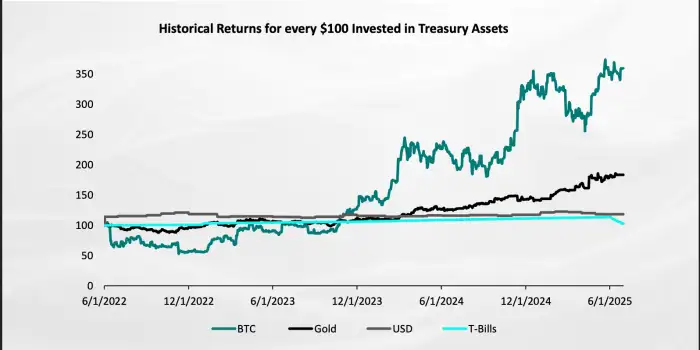
Bitcoin Beats Both Gold & T-bills On Returns & Tax Efficiency
Source: QCP
Arbitrage is the safest and most common form of exploiting a Bitcoin loophole. Here’s how pros do it:
Collect price feeds from multiple exchanges
Spot discrepancies (e.g. $50,000 on Binance vs. $50,100 on Coinbase)
Bots execute trades in milliseconds
Buy low → transfer funds → sell high
Profit from the spread, often 0.2–0.5% per trade
Use co-located servers near exchange data centers
Factor in trading fees, latency, and withdrawal time
Limit positions to avoid slippage and bot detection bans
When used wisely, this Bitcoin loophole strategy can deliver consistent micro-profits without risky leverage or exposure to dodgy platforms.
Unfortunately, the term “Bitcoin Loophole” is often co-opted by scams. Fake trading bots and platforms use the name to promise guaranteed daily returns, tricking users into handing over their funds.
Promises of 5–10% daily profits
No team info, no verifiable addresses
Glowing reviews with fake celebrity endorsements
Excuses for delayed withdrawals: “pending KYC,” “maintenance,” etc.
Users deposit money after slick marketing
The “bot” shows inflated account balances
Withdrawals are blocked, and support goes dark
Platform vanishes, funds lost
Even legitimate Bitcoin loophole strategies carry real risks. Key ones include:
Reentrancy attacks
Integer overflows/underflows
Poorly written withdrawal logic
Flash loan attacks can spoof price feeds
Use multi-source oracles like Chainlink
Hot wallets = easy access, higher risk
Cold wallets = secure, slower, but safer
Consider multi-signature wallets for shared access and extra protection
Global regulation is evolving fast. While some Bitcoin loopholes involve legitimate tax planning, others risk running afoul of the law.
Singapore: No capital gains tax on crypto
EU: MiCA regulation will increase compliance for token issuers
USA: FinCEN expanding AML reporting requirements
Report all trades unless local laws say otherwise
Use crypto tax tools like CoinTracker or Koinly
Keep CSV exports of trade history and wallet activity
A Bitcoin loophole is a situation, technical, market, or regulatory, that can be legally exploited for profit. Common examples include arbitrage trades or tax-optimized structures.
No. Arbitrage is legal, but exploiting tax reporting gaps or unlicensed platforms can get you into serious trouble.
Most platforms branded as Bitcoin Loophole bots are scams. Avoid any site promising guaranteed returns or showing fake testimonials.
Use hardware wallets, audited smart contracts, and avoid giving private keys or seed phrases to any platform.