In the rapidly evolving world of blockchain technology, Solana has emerged as a high-performance platform built to meet the demands of modern decentralized applications. Known for its lightning-fast speeds and minimal transaction costs, Solana is transforming how users engage with decentralized finance (DeFi) and non-fungible tokens (NFTs). As crypto adoption expands, speed, scalability, and affordability have become essential, and that’s where Solana excels.
At the core of its innovation lies proof of history, a revolutionary consensus mechanism that enables this fast blockchain to process thousands of transactions per second without compromising security or decentralization. With this breakthrough, SOL—the native token of the network—has become a favorite among developers and investors seeking efficiency in an increasingly congested market.
Beyond DeFi, Solana NFTs have carved out a distinct niche, offering creators and collectors a scalable alternative to Ethereum’s high gas fees. From NFT marketplaces to DeFi protocols, the ecosystem is thriving with activity and new possibilities.
In this blog, we’ll explore what makes Solana unique, how it powers both DeFi and NFTs, and what the future holds for this ambitious blockchain network.
Table of Contents
What is Solana?
A Quick Look at Solana’s Origins
Solana is a high-speed, Layer 1 blockchain launched in March 2020 by former Qualcomm engineer Anatoly Yakovenko. His goal was to create a blockchain that could scale globally without sacrificing decentralization or speed. Backed by a team of engineers from tech giants like Apple and Intel, Yakovenko envisioned a system that could rival traditional financial networks in terms of performance.
That vision gave birth to Solana, a network capable of processing tens of thousands of transactions per second at a fraction of the cost found on older blockchains.
Since its launch, SOL, the native cryptocurrency of the network, has grown into a major player in the crypto market. It powers everything within the ecosystem—from transaction fees to staking and governance—while playing a key role in decentralized finance and the emerging NFT landscape.
Proof of History: The Engine Behind the Speed
One of the standout features of Solana is its unique consensus mechanism called Proof of History (PoH). Unlike traditional consensus protocols like Proof of Work (PoW) or Proof of Stake (PoS), PoH introduces a cryptographic clock that timestamps transactions before they are added to the blockchain.
This breakthrough allows validators to agree on the time and order of transactions without waiting for block confirmations. As a result, Solana can achieve unparalleled speed and efficiency, solidifying its reputation as a fast blockchain. The combination of PoH with other mechanisms like Tower BFT and Turbine (its block propagation protocol) ensures that the network remains both scalable and secure.
Solana vs. Ethereum and Other Layer 1s
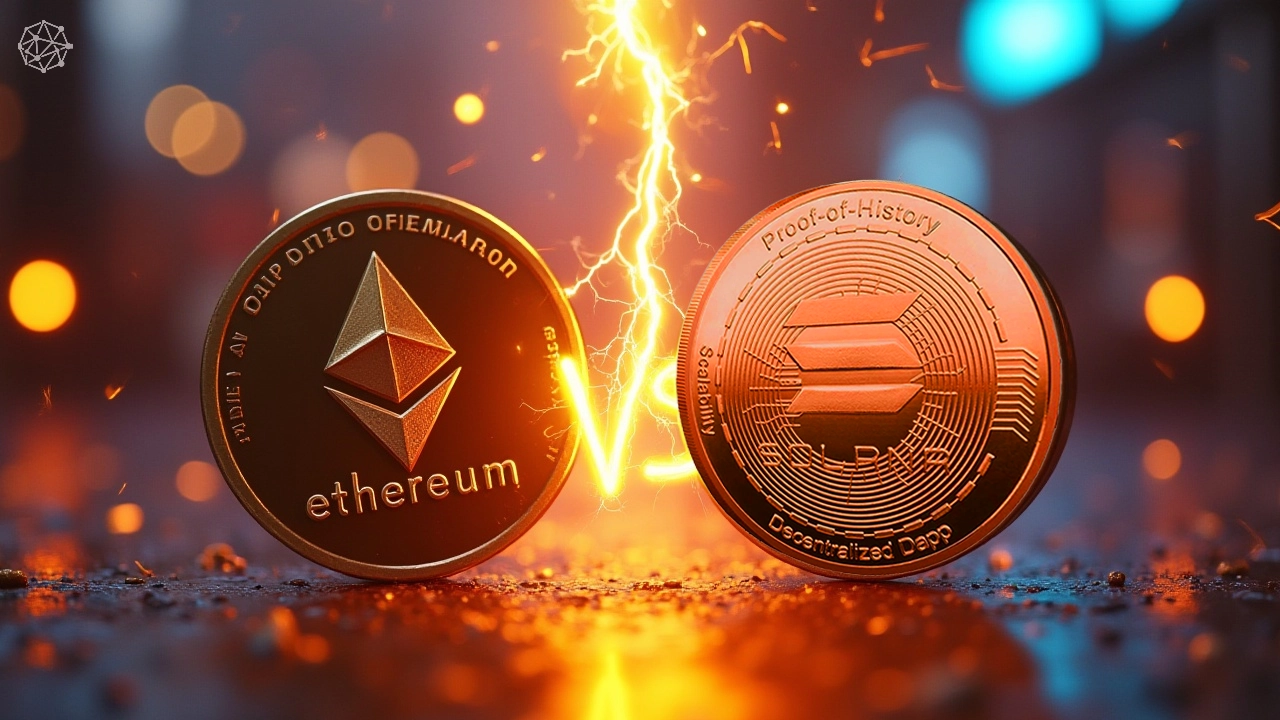
When comparing Solana to other Layer 1 blockchains like Ethereum, several distinctions stand out:
| Feature | Solana | Ethereum |
| Consensus Mechanism | Proof of History + PoS | Proof of Stake (formerly PoW) |
| Transaction Speed | ~65,000 TPS | ~15 TPS |
| Average Fee | <$0.01 | $1–$20+ (variable) |
| Finality Time | ~400ms | ~6 minutes |
While Ethereum remains the most widely used blockchain for DeFi and NFTs, it struggles with scalability and high gas fees, often creating bottlenecks during peak activity. Solana, on the other hand, is designed from the ground up for high throughput and affordability. Its architecture eliminates the need for Layer 2 scaling solutions, making it an attractive option for developers looking to build real-time decentralized apps.
Other fast Layer 1 competitors like Avalanche and Binance Smart Chain also offer speed and low costs, but Solana’s unique use of Proof of History gives it a technological edge in processing efficiency.
Solana for DeFi: Speed Meets Scalability
The decentralized finance (DeFi) movement thrives on efficiency, transparency, and cost-effectiveness—traits that Solana delivers in abundance. As demand for real-time financial services on the blockchain grows, developers and users alike are flocking to Solana for its remarkable speed, minimal fees, and highly scalable infrastructure.
Traditional blockchains like Ethereum often face network congestion and high gas fees, which can deter new users and limit innovation. In contrast, Solana’s high throughput and low-cost transactions provide an ideal environment for building scalable DeFi applications that can serve millions of users simultaneously. This advantage makes it a preferred choice for DeFi developers seeking performance without compromising decentralization.
Why DeFi Platforms Choose Solana?
What truly sets Solana apart is its ability to process up to 65,000 transactions per second with fees typically under $0.01. This makes real-time trading, lending, and yield farming not only possible but smooth and affordable. With Proof of History at its core, the network ensures that transactions are validated quickly and accurately, removing delays that plague many other ecosystems.
For developers building DeFi protocols, these attributes reduce technical limitations and open up new possibilities for user experience, automation, and scalability.
Key Solana-Based DeFi Projects
The Solana ecosystem is home to several innovative DeFi platforms that are helping shape the future of finance:
- Raydium: A leading automated market maker (AMM) that offers fast swaps and deep liquidity pools by integrating with Serum’s central limit order book.
- Jupiter: A powerful liquidity aggregator that routes users to the best prices across Solana’s DeFi landscape.
- Marinade Finance: A liquid staking protocol that allows users to stake SOL while maintaining access to liquidity through mSOL.
These platforms leverage Solana’s fast blockchain architecture to offer seamless user experiences, reduced slippage, and real-time financial interactions.
Powering the Next Wave of DeFi Innovation
The combination of speed, scalability, and low fees makes Solana an attractive foundation for the next generation of DeFi. By removing performance bottlenecks, the network enables builders to focus on innovation rather than workarounds.
To better understand the foundational concepts behind this transformation, check out our Exploring Decentralized Finance (DeFi) for Beginners guide.
Solana in the NFT Space

While Ethereum once dominated the NFT conversation, Solana has quickly carved out its own vibrant space in the world of digital collectibles. Thanks to its blazing speed and ultra-low fees, Solana NFTs have gained massive traction among creators, collectors, and developers seeking alternatives to Ethereum’s high gas costs. Projects like Solana Monkey Business, Mad Lads, and Okay Bears have helped elevate the network’s reputation as a serious contender in the NFT ecosystem.
The appeal? Fast, low-cost transactions that don’t compromise on user experience or artistic quality.
Near-Zero Gas Fees and Fast Minting
One of the biggest challenges in the NFT space is the high cost of minting and transferring digital assets. With Solana, that problem virtually disappears. Its fast blockchain architecture and proof of history consensus enable rapid and cost-effective minting, often at a fraction of a cent per transaction. This accessibility is a game-changer for artists and creators who no longer need to worry about losing profits to expensive gas fees.
Additionally, fast transaction speeds ensure real-time interactivity for both users and marketplaces, reducing failed transactions and bottlenecks.
Leading Solana NFT Marketplaces
The Solana ecosystem boasts several thriving NFT marketplaces that serve as the backbone for buying, selling, and trading digital assets:
- Magic Eden: The largest and most popular marketplace for Solana NFTs, known for its user-friendly interface and community-driven initiatives.
- Tensor: A newer, pro-trader-focused platform offering advanced analytics and high-speed trading features.
These marketplaces, built on Solana’s infrastructure, deliver seamless experiences and support the expanding NFT creator economy.
For those new to the space, be sure to read NFTs Explained: A Beginner’s Guide to Non‑Fungible Tokens to grasp the basics.
Solana’s Fee Structure vs. Ethereum
When comparing blockchain platforms, transaction costs are one of the most critical factors for users and developers alike. In this area, Solana has set itself apart with its ultra-low fees, making it a preferred choice for high-volume activity such as NFT minting and DeFi interactions.
Ultra-Low Transaction Costs on Solana
Solana boasts average transaction fees of less than $0.001, a stark contrast to other leading blockchains. Its highly scalable architecture, built on a proof-of-history (PoH) and proof-of-stake (PoS) hybrid model, enables the network to process thousands of transactions per second with minimal cost. This makes Solana ideal for micro-transactions, on-chain trading, and other cost-sensitive activities.
How Does It Affect NFT Minting and DeFi Transactions?
For creators and developers in the NFT space, Solana’s minimal fees reduce the financial barrier to entry. Unlike Ethereum, where high gas fees can significantly increase the cost of minting, Solana allows creators to launch large-scale collections affordably. In DeFi, Solana’s fee efficiency supports high-frequency trading, yield farming, and real-time payments without worrying about transaction overhead.
As a result, Solana has become a hub for fast-moving DeFi protocols and emerging NFT marketplaces, where affordability and speed are top priorities.
Comparison with Ethereum’s High and Fluctuating Gas Fees
Ethereum, while the most established smart contract platform, still struggles with high and volatile gas fees, especially during periods of network congestion. On average, Ethereum gas fees can range from a few dollars to over $50, depending on activity. This unpredictability can deter new users, discourage experimentation, and limit small-scale applications.
While Ethereum is transitioning to Ethereum 2.0 and Layer 2 scaling solutions, Solana’s base layer already provides cost efficiency, offering a smoother user experience.
To understand why these fees vary so dramatically, read our full guide on Understanding Crypto Gas Fees.
Challenges and Criticisms
Despite its impressive growth and technological innovation, Solana is not without its challenges. As the network has scaled rapidly in the realms of DeFi and Solana NFTs, several issues have surfaced that could impact long-term adoption and stability.
#1 Network Outages and Downtime
One of the most frequently cited concerns with Solana is its history of network outages. Since 2021, the blockchain has experienced multiple periods of downtime due to overwhelming transaction loads, bugs, or validator issues. While these outages are often resolved quickly, they raise concerns about reliability, especially for developers building financial applications that require consistent uptime.
In a decentralized system, resilience is critical. Though Solana’s fast blockchain capabilities are impressive, network stability must catch up to match its speed.
#2 Centralization Concerns
Another recurring criticism revolves around centralization. Unlike Ethereum’s widely distributed validator set, Solana has been criticized for having a relatively smaller number of validators, many of whom require high-end hardware to participate. This creates barriers to entry and may concentrate control among a limited group of operators.
For a blockchain that prides itself on decentralization and trustlessness, this imbalance can be problematic. Critics argue that the current validator landscape weakens Solana’s claim to being truly decentralized.
#3 Developer Churn and Ecosystem Maturity
While the Solana ecosystem has attracted significant developer interest, it has also experienced notable churn. Rapid growth, network instability, and shifting incentives have led some projects to migrate or pause development.
Additionally, as a relatively young blockchain (launched in 2020), Solana’s ecosystem is still maturing. While the network has made progress in areas like tooling, documentation, and community engagement, it must continue to evolve to retain developers and foster sustainable innovation.
The Road Ahead for Solana

Despite its growing pains, Solana continues to push forward with innovation, ecosystem expansion, and a bold long-term vision. The network has made notable strides in improving performance, supporting developers, and exploring new frontiers in blockchain utility.
Recent Improvements and Ecosystem Growth
In response to previous outages and criticism, the Solana team has rolled out a series of performance upgrades and validator enhancements. These updates aim to increase network stability while preserving the fast blockchain experience that makes Solana so appealing. The ecosystem itself continues to flourish, with thriving DeFi platforms, NFT marketplaces, GameFi projects, and developer grants attracting both talent and users.
From new dApps to infrastructure tools, the pace of growth signals strong confidence in the platform’s long-term value.
Solana Mobile: Bringing Web3 to Your Pocket
One of Solana’s most ambitious moves is its foray into mobile with the Solana Mobile Saga phone. Designed specifically for Web3 users, the Saga features a built-in Solana dApp store and secure seed vault, allowing users to seamlessly interact with wallets, Solana NFTs, and DeFi apps on the go.
This hardware innovation reflects Solana’s commitment to mainstream adoption, bridging the gap between blockchain technology and everyday mobile users.
Strategic Partnerships and Vision
Solana’s ecosystem is also benefiting from high-profile partnerships across the crypto and tech sectors. Collaborations with payment platforms, NFT brands, and DeFi protocols have helped expand the network’s utility and visibility.
The long-term vision remains ambitious: to become the fastest, most user-friendly platform for decentralized apps across industries—from finance and gaming to retail and media.
FAQs
What makes Solana faster than other blockchains?
Solana uses a unique consensus mechanism called proof of history, which timestamps transactions before they’re processed. This allows the network to achieve extremely high speeds—up to 65,000 transactions per second—making it one of the fastest blockchains in the crypto space.
Is SOL a good investment for DeFi and NFT users?
SOL, the native token of Solana, plays a key role in powering DeFi platforms and Solana NFTs. With low transaction fees and a growing ecosystem, many investors and developers view SOL as a promising asset within the Web3 landscape.
Why are DeFi projects choosing Solana over Ethereum?
DeFi platforms are increasingly choosing Solana because of its speed, low costs, and scalability. Unlike Ethereum, which often suffers from congestion and high gas fees, Solana provides a smooth and affordable experience for real-time financial applications.
Are Solana NFTs different from Ethereum NFTs?
Functionally, Solana NFTs are similar to those on Ethereum, but they benefit from faster minting and near-zero gas fees. This makes them more accessible to creators and collectors, especially those entering the NFT space for the first time.
Has Solana resolved its network outage issues?
While Solana has faced some network outages in the past, recent upgrades and validator improvements aim to enhance stability. The team continues to work on solutions to ensure the network remains reliable as it scales.
Conclusion
As the crypto landscape continues to evolve, Solana has firmly positioned itself as a leading platform for decentralized innovation. Its unmatched transaction speed, enabled by the groundbreaking proof of history mechanism, sets it apart as a truly fast blockchain, ideal for both DeFi and NFT applications.
By offering low fees, rapid execution, and a developer-friendly ecosystem, Solana is attracting a wide range of projects, from high-performance trading platforms to creative Solana NFTs. Despite challenges like network outages and centralization concerns, ongoing improvements and ambitious expansions—such as the Solana Mobile initiative—demonstrate the team’s commitment to long-term scalability and adoption.
Whether you’re a trader exploring new DeFi protocols or an artist launching your first NFT collection, Solana offers a powerful and efficient foundation. As the ecosystem matures, its role in shaping the future of Web3 looks increasingly promising.