Introduction
The blockchain world is evolving rapidly, with newer layer-1 networks emerging to solve the limitations of older architectures. One such promising innovation is Sui, a high-performance, scalable blockchain designed for the next generation of decentralized applications. Built by Mysten Labs, Sui stands out for its unique approach to smart contract execution, leveraging the Move language and an object-centric data model to enable fast, secure, and parallelizable transactions.
Unlike traditional chains, where account balances represent assets, Sui treats everything as an object. This object-centric architecture opens up new possibilities for asset ownership, NFT creation, and dynamic interaction between digital assets. Coupled with the Move language, originally developed at Meta, developers gain access to a powerful, secure programming environment tailored for Web3 innovation.
Another major advantage of Sui is its support for sponsored gas, which allows developers or platforms to pay transaction fees on behalf of users, thereby removing a common barrier to entry in decentralized ecosystems.
Whether you’re a DeFi builder, NFT creator, or Web3 enthusiast, Sui offers a fresh perspective on blockchain design. This blog explores how its architecture, development tools, and user-first features make Sui a standout project in the growing Web3 landscape.
Key Takeaways:
- What is Sui? A high-performance layer-1 built by Mysten Labs that swaps the classic account model for an object-centric architecture.
- Smart-Contract Language – Uses Move, a resource-oriented language originally from Meta, giving strong safety guarantees and deterministic execution.
- Speed & Parallelism – Independent objects mean non-overlapping transactions run in parallel, unlocking thousands of TPS with sub-second finality.
- Sponsored Gas – dApps can pay fees for users, eliminating the “gas-wallet” hurdle and smoothing Web3 onboarding.
- Dev Benefits – Simplified asset modeling, richer composability for NFTs/DeFi, and a smaller attack surface thanks to Move’s ownership rules.
- Use-Case Sweet Spots – Real-time games, dynamic NFTs, modular DeFi primitives, and on-chain social apps that demand low latency.
- Risks & Critiques – Early-stage ecosystem, token distribution–driven centralization concerns, and the learning curve of a new language.
- Roadmap – Faster finality, deeper IDE support, grant programs, and more integrations aimed at scaling both tech and community.
Table of Contents
What is Sui Blockchain?
Sui is a next-generation layer-1 blockchain developed by Mysten Labs, a team of seasoned engineers formerly at Meta (Facebook), who were instrumental in the Diem and Novi projects. Their experience in building secure, high-performance systems shaped the foundation of Sui, which prioritizes user experience, scalability, and safety.
The creators of Sui set out to overcome the bottlenecks of traditional blockchains like Ethereum, which struggle with network congestion, high gas fees, and sequential transaction execution. With this vision, they built a new blockchain from the ground up, introducing a radically different architecture powered by the Move language and an object-centric data model.
Core Design Goals: Speed, Scalability, and Simplicity
At its core, Sui is built for low latency and high throughput. It introduces parallel transaction processing, allowing non-overlapping operations to execute simultaneously—something that most existing blockchains cannot do. This dramatically improves transaction speeds while maintaining data integrity and security.
The use of the Move language allows developers to write secure, composable smart contracts that are tailor-made for the object-centric nature of Sui. In this model, digital assets are treated as programmable objects with defined ownership and behavior. This simplifies how applications manage assets like NFTs, tokens, and gaming items, making development faster and less error-prone.
Sui vs Ethereum and Solana: What’s Different?
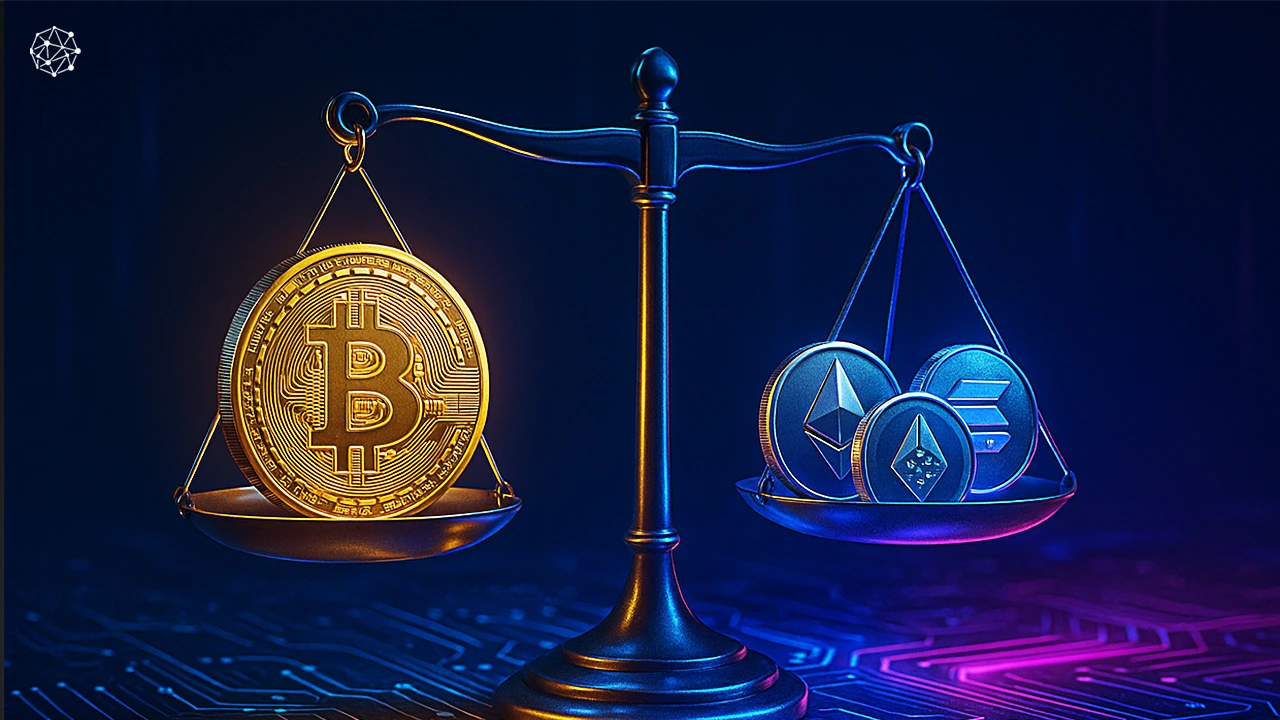
While Ethereum remains the most widely used smart contract platform, it faces limitations such as network congestion and high gas fees. Solana, another high-speed blockchain, offers impressive throughput but has struggled with outages and centralization concerns.
Sui, on the other hand, takes a different approach by rethinking the data model entirely. Its object-centric design allows it to bypass the account-based structure of Ethereum, enabling parallel execution of transactions and more efficient use of computational resources. This is especially valuable for applications requiring high interactivity, such as games, marketplaces, and DeFi platforms.
Moreover, Sui introduces the concept of sponsored gas, where developers or dApps can cover transaction fees for their users. This removes one of the most significant frictions in onboarding users to Web3: paying gas fees.
Understanding the Move Programming Language
The foundation of Sui’s smart contract capabilities lies in the Move language—a secure and efficient programming language initially developed for Meta’s Diem blockchain. While Diem never launched publicly, its innovations lived on, with Move becoming a powerful tool for next-generation blockchains like Sui and Aptos.
What Makes Move Unique?
Unlike traditional languages used in Web3 development, Move is a resource-oriented programming language. In Sui, assets like tokens or NFTs are represented as distinct, owned resources that cannot be copied or discarded arbitrarily. This helps developers avoid many of the common bugs and exploits seen in Ethereum’s Solidity-based contracts.
Move provides strong safety guarantees, ensuring that once a resource is assigned to an address or contract, it cannot be accidentally duplicated or lost, crucial for preventing vulnerabilities in DeFi and NFT applications. Additionally, Move ensures deterministic behavior, meaning smart contracts on Sui always execute in predictable ways, critical for consistency and auditability.
Move vs Solidity or Rust
While Solidity is Ethereum’s de facto standard, it often suffers from complexity and security gaps, especially for new developers. Rust, used in blockchains like Solana, is powerful but has a steep learning curve. Move, by contrast, is intentionally designed for blockchain-specific use cases, combining simplicity with robust security.
What sets Move apart is how naturally it fits into Sui’s object-centric framework. Assets are treated as programmable objects, making it easier to build complex dApps without relying on fragile workarounds. Developers can focus more on business logic and less on managing low-level state transitions.
Efficiency and Gas Optimization
Because Sui uses a transaction model based on owned objects, it can process non-overlapping transactions in parallel, reducing execution time and optimizing gas usage. Combined with Move’s safety-first design, this results in a leaner, more scalable network. To learn more about how Sui minimizes gas-related issues, check out our guide: Understanding Crypto Gas Fees.
Object-Centric Design: A Game Changer

One of the defining innovations that sets Sui apart from other blockchains is its object-centric architecture. Unlike account-based blockchains like Ethereum, where tokens are essentially balances tied to addresses, Sui treats everything—from assets to contracts—as native, on-chain objects. This object-oriented approach introduces an entirely new way to manage data and interactions on the blockchain.
Definition of Objects in Sui’s Architecture
In Sui, an object is a programmable unit of data with a unique identifier, defined ownership, and mutable state. These objects can represent tokens, NFTs, credentials, access rights, or any form of digital asset. Thanks to the Move language, which powers Sui’s logic layer, these objects are treated as real resources, meaning they can’t be copied or destroyed arbitrarily. This adds strong guarantees around digital ownership and asset control.
Objects exist independently of each other, and their interactions are clearly defined through transactions. This fundamental shift enables several significant improvements in how blockchain-based applications are built and scaled.
How Object-Based Design Impacts the Blockchain Experience?
1. Ownership and Composability
In a traditional blockchain, ownership is tracked at the account level, and composability often requires passing balances or permissions between contracts. In Sui, every object has a specific owner—be it a user, smart contract, or shared state—which simplifies and strengthens how ownership is managed.
Composability also benefits greatly. Developers can program objects that interact with one another like modules, using the Move language to define clear behaviors and permissions. For instance, an NFT representing a game character can own other objects like weapons or achievements, forming a rich, composable hierarchy that mimics real-world systems.
2. Parallel Transaction Execution
Because objects in Sui are independent, transactions that involve separate objects can be executed simultaneously. This is a breakthrough feature that solves one of the biggest pain points in other blockchains—sequential execution bottlenecks.
Parallel execution allows Sui to handle thousands of transactions per second without compromising security. If one transaction updates a player’s inventory and another updates a marketplace listing, Sui processes both at once, unlike Ethereum, where they’d be queued and ordered. This boosts overall network efficiency and reduces latency for end users.
3. Speed and Scalability
The combination of parallelism and object-centric architecture results in unmatched scalability. As network activity grows, Sui doesn’t slow down—it becomes more efficient. This makes the blockchain ideal for applications that demand high throughput and real-time responsiveness, such as multiplayer games, live auctions, and DeFi trading platforms.
This design also aligns with Sui’s sponsored gas feature. Developers can sponsor transaction fees for users, removing a major hurdle to mainstream adoption. When paired with fast execution and modular data handling, Sui becomes not only a developer-friendly ecosystem but also a user-centric one.
Real-World Examples of Object-Centric Applications
The object-centric model unlocks new possibilities across multiple sectors:
- Gaming Assets: Characters, items, and achievements are all treated as objects. Players can fully own, upgrade, and transfer their assets on-chain without latency or bottlenecks.
- NFT Lifecycle Management: In Sui, NFTs are not just metadata files. They are rich, stateful objects that can evolve—think dynamic art, level-based access passes, or customizable collectibles.
- User-Generated Content (UGC): Comments, media uploads, and interactions can each be structured as objects. This enables decentralized social platforms where each action is traceable, ownable, and verifiable.
Related Read: NFTs Explained: A Beginner’s Guide — a great primer to understand how Sui’s object model takes NFTs to the next level.
Benefits for Developers and Use Cases
Sui is more than just a fast blockchain—it’s a developer-centric platform designed to simplify asset modeling, enhance composability, and improve overall security. Thanks to its innovative object-centric architecture and the resource-safe Move language, developers building on Sui gain an edge in speed, flexibility, and reliability. Whether you’re crafting NFTs, launching DeFi protocols, or creating immersive metaverse experiences, Sui offers the tools and structure to make it happen at scale.
Benefit 1. Simplified Asset Modeling
In traditional smart contract platforms like Ethereum, developers must write complex logic to handle ownership, state transitions, and validations for each tokenized asset. This can be tedious and error-prone. With Sui, assets are modeled as first-class objects on-chain, making asset creation and management far more intuitive.
Each object in Sui has built-in ownership and lifecycle rules, reducing the need for excessive boilerplate code. Developers can create tokens, collectibles, or credentials as unique, programmable entities with their behaviors. This model accelerates development and improves code maintainability, especially in fast-moving industries like NFTs and DeFi.
Benefit 2. Better Composability for NFTs and DeFi Apps
Composability is the key to innovation in Web3. On Sui, because all on-chain entities are objects, developers can nest and connect them seamlessly. For example, a single NFT could contain metadata, user-generated modifications, reward points, or unlockable content—all structured as child objects.
In DeFi, Sui’s object-centric model allows for more modular financial building blocks. Liquidity pools, vaults, positions, and governance tokens can all exist as separate objects, interacting with one another efficiently and securely.
This kind of modular design improves interoperability between applications and protocols, helping builders create richer ecosystems with less technical friction. It also improves the user experience, as interactions become more fluid and transparent.
Related Read: Exploring Decentralized Finance (DeFi) for Beginners — a great primer on how DeFi is evolving and how chains like Sui are enabling its next phase.
Benefit 3. Reduced Attack Surface with Move’s Safety Model
Security is a persistent challenge in blockchain development. Exploits in smart contracts have led to millions in losses across the ecosystem. Sui addresses this head-on with the Move language, which is specifically designed to avoid common vulnerabilities found in smart contracts.
Move’s resource-based logic ensures that assets (objects) cannot be duplicated or destroyed unless explicitly allowed. This significantly reduces the chance of critical bugs like re-entrancy attacks, integer overflows, or logic errors in ownership tracking.
Additionally, Move’s strong type system and formal verification capabilities give developers more confidence in their code. When building mission-critical applications—especially in financial domains—this level of safety is essential.
Key Use Cases on Sui
1. DeFi Protocols
The flexibility and safety of Move language, combined with Sui’s scalability and sponsored gas, make it a compelling platform for building next-generation DeFi apps. Protocols can offer zero-gas transactions to new users, improving onboarding while maintaining high throughput and low latency. Smart contracts for lending, staking, yield farming, and asset swapping can be structured as modular, auditable components, reducing risk and increasing transparency.
2. NFT Platforms and Marketplaces
Sui’s object-centric design is ideal for managing NFTs with complex states. Artists and creators can launch dynamic NFTs that evolve or include embedded utilities. Marketplaces can easily support advanced features like lazy minting, real-time royalties, or composable collectibles. Developers no longer need to reinvent ownership models; Sui handles it natively at the protocol level.
3. Web3 Gaming and Metaverse Integration
In gaming, objects like avatars, weapons, or skins can be programmed to retain history, achievements, or traits, creating deeper user immersion. Developers can even build micro-economies within games, where each object has marketable value and behavioral logic. With Sui’s scalability and parallel execution, these environments can support high activity without lag, making the metaverse more responsive and user-friendly.
Sui vs Other Move-Based Chains
As blockchain development evolves, several next-gen platforms have emerged to address the scalability and security limitations of legacy networks. Among them, Sui and Aptos stand out as two leading chains that leverage the Move language, created at Meta for the now-defunct Diem project. While both share a common lineage, they’ve taken distinct paths in terms of architecture, performance, and developer focus.
Shared Roots in Move
Both Sui and Aptos use the Move language as their foundation for smart contract development. Move was designed to offer stronger safety guarantees, resource-based logic, and protection against common smart contract vulnerabilities. As a result, both chains emphasize security, composability, and developer control.
However, their implementations of Move diverge to serve different goals. Aptos uses a modified version of Move optimized for its own virtual machine and execution model. Sui, in contrast, has customized Move to support its innovative object-centric data structure, where everything on-chain is treated as an object with a unique owner and lifecycle.
Key Technical and Architectural Differences
The most fundamental difference lies in data modeling. Aptos retains an account-based architecture similar to Ethereum, where transactions affect account balances and smart contract states. Sui, however, adopts a radically different object-centric approach, which allows for greater composability, clearer ownership structures, and fine-grained control of digital assets.
Another major distinction is transaction execution. Aptos uses a parallel execution engine that attempts to detect non-conflicting transactions during runtime. Sui goes a step further by enabling parallel execution by design, thanks to its object model. Transactions in Sui that involve separate objects can be executed simultaneously without complex conflict detection.
This gives Sui a distinct performance edge, especially in applications like NFTs, gaming, and real-time DeFi operations.
Performance and Ecosystem Traction
Both Aptos and Sui boast high throughput capabilities. Aptos has reported testnet speeds exceeding 160,000 TPS (transactions per second), while Sui emphasizes real-world performance, achieving thousands of TPS with low finality times and strong horizontal scalability.
From an ecosystem perspective, SUI is gaining traction among developers building dynamic NFT platforms, games, and consumer-friendly apps that benefit from features like sponsored gas. Meanwhile, Aptos has found favor with DeFi developers who prefer a more traditional account-based approach with Move’s safety advantages.
Ecosystem and Developer Tools

The growing popularity of Sui is closely tied to its developer-first ecosystem and robust toolset. With a vision to make blockchain development more accessible and scalable, Sui provides a range of integrated tools that streamline the building and deployment process, whether you’re creating DeFi protocols, NFT platforms, or complex object-centric dApps.
Developers can start with the Sui CLI, a command-line interface that allows for testing, object management, and direct interaction with the network. It’s tightly integrated with the Move language, giving developers hands-on control over resource-based programming. For those building larger applications, Sui SDKs (in TypeScript and Rust) simplify backend integration and front-end communication.
The ecosystem also includes detailed blockchain explorers, enabling users and builders to track object histories, transaction flows, and account activity in real time, essential for transparency and debugging.
Behind these tools is Mysten Labs, the core team supporting Sui’s growth. In addition to maintaining the protocol, Mysten offers documentation, tutorials, and technical support that help onboard developers quickly.
To further encourage innovation, Sui runs several grants and community programs designed to support early-stage projects, open-source contributions, and educational initiatives. Whether you’re a solo builder or part of a team, the support available makes SUI one of the most developer-friendly blockchains on the market today.
Risks and Criticism
While Sui brings innovation to blockchain architecture with its object-centric model and developer-first design, it’s not without its risks and criticisms. Like any emerging technology, it faces scrutiny from the community on several fronts, ranging from decentralization to adoption maturity.
Centralization Concerns
One of the most frequently voiced criticisms revolves around Sui’s token distribution and validator structure. At launch, a significant portion of the SUI token supply was allocated to early investors, core team members, and private stakeholders. This raised concerns about potential centralization and the long-term influence of corporate or venture capital interests over governance decisions.
Although the project has laid out a roadmap for progressive decentralization, critics argue that such initial imbalances could influence validator incentives, voting power, and treasury management. For a blockchain aspiring to support open, permissionless innovation, these concerns need to be addressed transparently.
An Early-Stage Ecosystem
Another important consideration is that Sui is still in its early stages. While it has shown technical promise, the ecosystem remains relatively small compared to more mature chains like Ethereum or Solana. This means fewer protocols, limited tooling outside core infrastructure, and reduced liquidity for DeFi applications.
Despite an active push from Mysten Labs—including grants and onboarding initiatives—adoption takes time. For developers and users, this translates into higher risk when committing resources or deploying production-level applications.
It’s worth noting that early-stage ecosystems can be fertile ground for innovation, but they also come with volatility, evolving standards, and potential network-level changes as the chain matures.
Security and Smart Contract Maturity
While the Move language was designed with safety in mind—offering strong guarantees around ownership and resource management—it’s still relatively new to many developers. The lack of battle-tested, open-source smart contracts compared to Solidity creates a learning curve and potential blind spots in early deployments.
Additionally, although Sui’s object-centric model reduces many traditional attack surfaces, it introduces new architectural patterns that have not yet been fully stress-tested in large-scale environments. The coming months and years will be crucial in determining how well Sui handles real-world exploits, protocol-level bugs, and complex dApp behavior.
Future Roadmap
As the blockchain space continues to evolve, Sui is positioning itself as a foundational layer for the next generation of decentralized applications. With its technical architecture already offering a strong base, the roadmap ahead focuses on expanding functionality, deepening integrations, and scaling for mass adoption.
1. Upcoming Mainnet Features and Upgrades
The Sui development team, led by Mysten Labs, is actively working on a series of protocol upgrades that enhance performance and user experience. These include improved support for shared objects, faster finality times, and enhancements to the consensus mechanism for even greater scalability.
A key focus is advancing developer tooling for the Move language, including better error reporting, formal verification, and integration with mainstream IDEs. These tools will make it easier for new builders to adopt the object-centric programming model and deploy secure applications more efficiently.
2. Strategic Partnerships and Ecosystem Integrations
To strengthen its position in the Web3 space, Sui is pursuing strategic partnerships across DeFi, gaming, and infrastructure sectors. Recent collaborations have introduced SUI to new wallets, liquidity protocols, and NFT marketplaces—laying the groundwork for a more interconnected ecosystem.
In addition, Sui’s sponsored gas feature is being adopted by dApps looking to eliminate user friction, making onboarding easier for non-technical users.
3. A Vision for Scalable Web3 Applications
Long-term, Sui envisions itself as a platform that powers scalable, secure, and user-friendly decentralized apps. Whether it’s real-time gaming, composable finance, or on-chain social experiences, Sui’s object-centric design is uniquely suited to high-performance use cases that demand parallel execution and fine-grained control.
By focusing on developer empowerment, performance optimization, and community-driven growth, Sui is setting the stage for a blockchain ecosystem where both innovation and adoption can flourish.
FAQs
What makes Sui different from other blockchains like Ethereum or Solana?
Sui introduces an object-centric data model, treating all on-chain assets as programmable objects with defined ownership. Unlike Ethereum’s account-based model, this enables parallel transaction execution and improves performance, especially for applications involving NFTs, gaming, and high-throughput DeFi.
What is the Move language, and why is it important for Sui?
The Move language, originally developed for Meta’s Diem project, powers Sui’s smart contract functionality. It’s resource-based and offers strong safety guarantees, making it ideal for creating secure, composable contracts that interact with Sui’s unique object structure.
Does Sui have high gas fees like other blockchains?
No. One of Sui’s innovations is its support for sponsored gas, allowing developers or applications to pay gas fees on behalf of users. This reduces friction and improves onboarding, especially for non-technical users engaging with Web3 for the first time.
What are some real-world use cases being built on Sui?
Use cases include DeFi protocols with modular financial primitives, dynamic NFT platforms, real-time Web3 games, and on-chain social apps. The object-centric model makes it easy to build scalable, interactive digital experiences that are difficult to implement on traditional chains.
Is Sui decentralized and secure?
Sui is still evolving, and while its core protocol emphasizes scalability and safety via the Move language, decentralization remains a topic of discussion due to its early token distribution. The team is working toward long-term decentralization through community participation and governance.
Conclusion
Sui is more than just another layer-1 blockchain—it’s a bold reimagining of how decentralized applications can be built and scaled. With its unique object-centric design, parallel execution model, and developer-focused approach using the Move language, Sui addresses many of the performance and security limitations seen in traditional blockchains.
By simplifying asset modeling, enhancing composability, and reducing vulnerabilities, Sui provides a powerful foundation for the future of Web3. From dynamic NFTs and immersive gaming experiences to scalable DeFi platforms, its architecture opens doors to innovation that’s both practical and user-friendly.
Features like sponsored gas further lower the barrier for mass adoption, enabling smoother onboarding for everyday users.
While challenges like early-stage adoption and decentralization remain, Sui’s active roadmap, community support, and technical direction make it a project worth watching. For developers and creators alike, SUI presents an exciting frontier to build secure, scalable, and interactive blockchain applications.