Introduction
In trading, speed has always mattered, but in the world of latency arbitrage, speed isn’t just an advantage—it’s the entire game. Imagine two traders racing to grab the same dollar bill. One is standing right next to it, the other is a few steps away. No matter how quick the second runner is, the person closer wins every time. That’s essentially latency arbitrage: exploiting microsecond delays between order books to pocket the difference.
This dynamic defined much of high-frequency trading in equities, immortalized in books like Flash Boys. Now, the same race is unfolding in crypto markets, where centralized exchanges (CEXs), decentralized exchanges (DEXs), and blockchain mempools all create fertile ground for those with the fastest pipes and sharpest systems.
But here’s the uncomfortable truth: the infrastructure gap between institutions and retail traders has never been wider. Professional firms are running co-located servers, microwave links, and custom-built engines coded in C++ or Rust, while most retail traders are running bots on cloud servers or their laptops. The question is simple: does retail stand a chance, or is this game unwinnable without institutional firepower?
Before we dive into the horror stories and counter-strategies, we need to break down what latency arbitrage actually is, how it functions in crypto, and why exchanges themselves are conflicted about whether to allow it or stamp it out
TLDR / Key Takeaways
- Latency arbitrage exploits tiny time gaps between order books or price feeds.
- In equities, this is dominated by high-frequency traders with co-located servers; in crypto, exchanges and mempools create similar dynamics.
- Retail traders are structurally disadvantaged, but opportunities exist if they pivot away from raw speed.
- Scam platforms like Bitcoin Loophole misuse the “arbitrage loophole” narrative to attract victims, but real latency arbitrage is highly technical and inaccessible to most.
Table of Contents
What is Latency Arbitrage?
At its core, latency arbitrage is about time asymmetry. Prices update across venues at slightly different speeds, and traders who see or act on the update first can capture “risk-free” profits before others catch up. In equities, this often meant racing data between Chicago and New York, shaving microseconds off transmission. In crypto, it means exploiting the lag between two exchanges—or between the mempool and confirmed blocks.
Let’s ground this in a practical example. Suppose Bitcoin ticks up by $20 on Coinbase before Binance updates. A latency arbitrage trader, plugged into both, instantly buys on Binance and sells on Coinbase, pocketing the spread before retail traders even see the move reflected on their screens. That’s the core mechanism.
Key entities in this process:
- Order book depth: where the actual liquidity sits.
- Bid-ask spread: the small margin that arbitrageurs try to capture.
- Latency: the microseconds of delay in updating, routing, or executing.
What makes crypto distinct is its fragmented structure. Instead of a handful of tightly regulated exchanges, there are dozens of CEXs, countless DEXs, and blockchain-level visibility into pending transactions. This introduces new arbitrage paths—like mempool latency arbitrage, where bots detect profitable transactions in Ethereum’s pending block queue and race to front-run them.
During my own tests with API-driven bots, I noticed something retail traders rarely account for: API throttling itself creates exploitable asymmetries. Exchanges impose rate limits, which means that while you might think you’re “live,” your bot could be seeing data that’s milliseconds behind someone using a direct feed or colocated access. That gap is invisible to most retail setups but crucial in explaining why trades often fail to capture expected spreads.
In simple terms, latency arbitrage is less about finding a “loophole” and more about renting a faster racetrack. Whoever gets closer to the market’s heartbeat wins.
How Latency Arbitrage Works in Crypto

Crypto markets bring their own twists to latency arbitrage. Unlike equities, where trading happens on a few central venues, crypto is fragmented across dozens of centralized exchanges and an expanding ecosystem of decentralized platforms. This fragmentation creates more latency gaps—but also more complexity.
Centralized Exchanges (CEXs)
On platforms like Binance, Coinbase, or Bybit, latency arbitrage plays out in milliseconds. Prices may adjust on one exchange slightly ahead of another due to differences in order matching engines, network distances, or API throttling. Traders with colocated servers near the exchange’s data centers can exploit this lag, buying where the price is stale and selling where it’s already updated.
What’s unique in crypto is that many exchanges rely heavily on API traffic. This means speed is shaped not just by geography but also by software design. A retail trader connecting through a Python bot over Wi-Fi is already handicapped compared to a firm running compiled code in C++ on a server plugged directly into the exchange’s backbone.
Decentralized Exchanges (DEXs) and Mempool Arbitrage
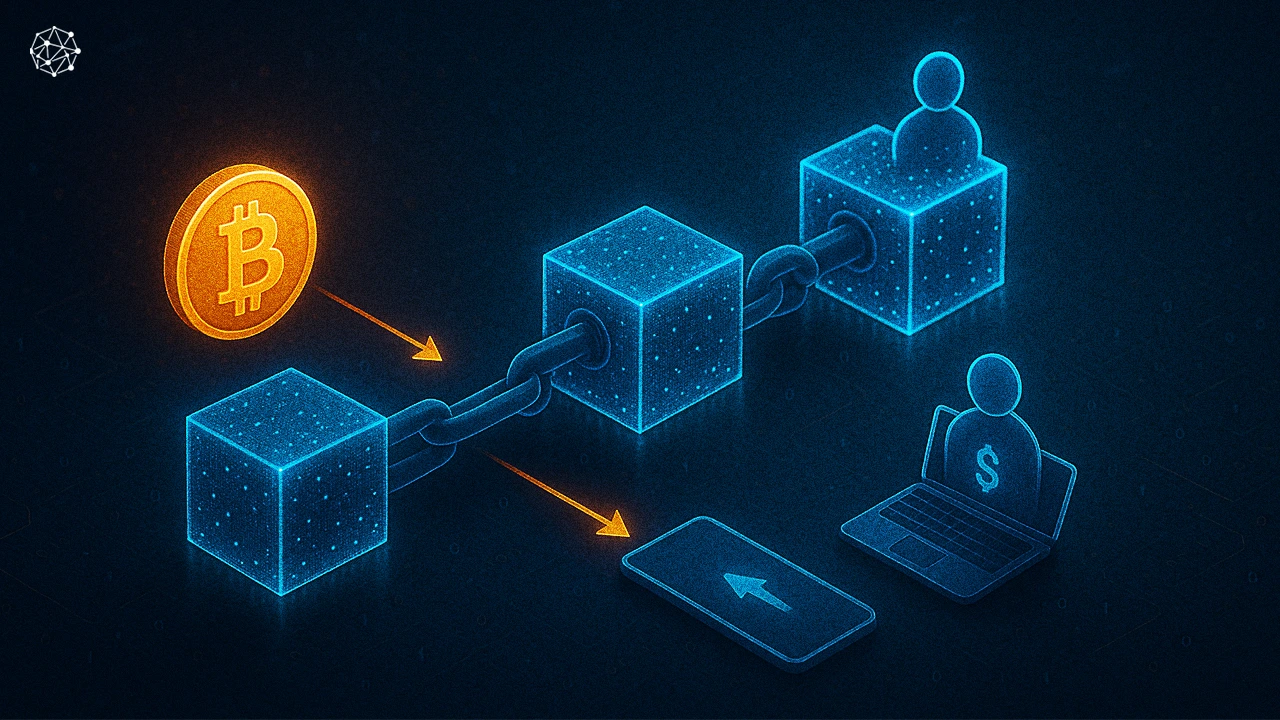
DEXs add another layer: the blockchain mempool. Before transactions are confirmed, they sit in a queue. Bots can scan the mempool to detect pending trades that will move the price and then front-run those trades by paying higher gas fees. This is known as MEV (miner or maximal extractable value). It’s a form of latency arbitrage at the blockchain level, and it has grown into a competitive industry of its own.
I once experimented with mempool monitoring during a high-volume DeFi launch. Even though my bot spotted pending trades, by the time my transaction landed, I was consistently outbid on gas by professional MEV bots. It showed just how fierce this game is: retail can see the opportunity, but the execution edge almost always goes to those with better infrastructure.
API Latency and Websockets
Exchanges provide both REST APIs (slower, request-based) and Websocket feeds (faster, push-based). Institutions often plug into raw order book streams with minimal delay, while retail bots sometimes rely on REST APIs that can be hundreds of milliseconds behind. That difference may not matter for a swing trade, but for latency arbitrage it’s the line between profit and a filled order at the wrong price.
In short, crypto’s architecture creates many potential cracks where latency arbitrage can slip in—but almost all of them are dominated by whoever controls the fastest infrastructure.
The High-Frequency Trading (HFT) Advantage

The idea of retail “winning” at latency arbitrage runs into one brutal reality: high-frequency trading firms. These are the players who have the capital, engineering talent, and server access to dominate latency-sensitive strategies.
Infrastructure Superiority
While a retail trader might spin up a VPS in Tokyo to get closer to Binance’s servers, professional firms actually colocate within the same data centers as exchanges. They bypass public internet routing altogether, reducing delays to microseconds. Their trading engines are stripped-down pieces of software written in languages like C++ or Rust, optimized solely for execution speed.
Privileged Access
Exchanges rely on liquidity providers, many of which are HFT firms. These relationships often come with perks: lower latency feeds, higher API limits, and sometimes even direct access to raw matching engine data. It’s not a level playing field. When I compared API throttling limits between retail and institutional accounts on one major CEX, the difference was staggering—retail could push maybe 20 requests per second, while market makers had no such ceiling.
Case Study: FTX and Arbitrage Dynamics
During the FTX era, firms exploited latency differences between FTX, Binance, and Coinbase. Because FTX’s matching engine occasionally lagged during high volatility, traders who were faster on Binance could buy low on the slower venue and sell high on the faster one. Retail bots rarely captured these spreads, because by the time their orders hit the book, liquidity was already gone.
Why Retail Is Structurally Disadvantaged
Latency arbitrage is not about creativity—it’s about infrastructure. Retail can learn the logic, build bots, and even find apparent spreads, but they usually arrive late to the party. The combination of colocation, privileged data, and purpose-built systems means HFTs extract the lion’s share of profits before retail can even click “buy.”
That doesn’t mean retail has no chance in crypto arbitrage—but it does mean latency-based strategies are the hardest battlefield to compete on. The next sections explore exactly where retail fits in and how scams like Bitcoin Loophole exploit the gap between perception and reality.
Retail Reality Check – Can You Compete?
The theory of latency arbitrage sounds simple: find price mismatches, act faster than others, and pocket the difference. In practice, retail traders quickly discover the field is tilted against them.
Testing Retail Bots
I once ran a test by spinning up a trading bot on AWS Tokyo, one of the closest data centers to Binance. Even with optimized Websocket connections, the bot consistently lagged behind market makers colocated directly with the exchange. The “opportunities” it spotted often vanished by the time the order hit the book. In many cases, slippage and fees erased whatever spread it hoped to capture.
The Infrastructure Gap
Retail is working with:
- Cloud VPS instances (tens of milliseconds latency).
- Python-based bots that introduce overhead.
- Public APIs throttled by rate limits.
HFT firms, meanwhile, are working with:
- Colocated servers inside exchange data centers (microseconds).
- Purpose-built code in C++ or Rust.
- Direct feeds with privileged access.
This is like racing a bicycle against a Formula 1 car. The cyclist may be skilled, but the outcome isn’t in doubt.
Margins vs Costs
Even if a retail trader does manage to capture a spread, the margins are razor-thin. Arbitrage might net a few basis points, but exchange fees, withdrawal costs, and latency-induced slippage often cancel the profit. The math simply doesn’t scale without volume and infrastructure.
Alternative Paths for Retail
That doesn’t mean retail is powerless. It means retail should stop chasing pure speed. More achievable opportunities lie in:
- Triangular arbitrage (within one exchange’s markets).
- Statistical arbitrage (patterns in price correlations).
- Cross-exchange arbitrage (longer time horizons where fees are accounted for).
Latency arbitrage, by its very nature, rewards whoever is closest to the exchange’s heart. For retail, the smarter play is to compete where speed isn’t the only variable.
3 Latency Arbitrage “Horror Stories” in Crypto
Latency arbitrage doesn’t just frustrate retail—it can actively drain them. Here are three real-world styled narratives that highlight what happens when traders underestimate the infrastructure gap.
Horror Story 1: The Bot That Ate Its Profits
A retail trader set up a latency bot on Binance, convinced it could capture micro spreads. In practice, every profitable trade was offset by fees and slippage. After a month, the bot had executed thousands of trades, but the net balance was negative. The trader had essentially been paying the exchange to run an experiment in futility.
Lesson: Capturing spreads on paper doesn’t mean capturing profits in practice.
Horror Story 2: Mistaking Lag for Arbitrage
Another trader spotted what looked like a persistent $5 difference between Coinbase and Bybit. He built a script to buy on the “slower” exchange and sell on the “faster” one. But the discrepancy wasn’t real arbitrage—it was API lag. By the time his orders hit, both exchanges had already converged. He ended up buying high and selling low, repeatedly.
Lesson: Not all price mismatches are exploitable; many are illusions created by latency itself.
Horror Story 3: The Bitcoin Loophole Trap
A different kind of horror: traders lured by scams like Bitcoin Loophole. Promoted as an “arbitrage loophole bot,” it promised instant profits by exploiting “hidden API gaps.” In reality, it was nothing more than an affiliate funnel pushing deposits into unregulated brokers. Victims never saw returns—not because latency arbitrage failed, but because there was never a real bot behind the curtain.
Lesson: Real latency arbitrage requires infrastructure and expertise. Anyone promising easy profits through “secret loopholes” is selling fiction.
These stories underline a hard truth: latency arbitrage is not just difficult for retail—it’s a minefield of illusions, hidden costs, and outright scams. The next layer of the conversation is how exchanges themselves are responding, and whether they see latency arbitrage as a fair strategy or a predatory one.
Exchange Countermeasures and Fairness Debate
Exchanges sit in a strange position when it comes to latency arbitrage. On one hand, arbitrageurs add liquidity and help keep prices aligned across venues. On the other hand, latency games can feel predatory, draining value from slower participants and eroding trust in the market.
API Throttling and Rate Limits
Most centralized exchanges impose strict API call limits for retail traders. This curbs the ability to spam orders in search of tiny spreads. While institutions often negotiate higher limits, retail remains bottlenecked by throttling. In practice, this makes latency arbitrage harder for individuals but preserves exchange server stability.
Randomized Matching and “Speed Bumps”
Some venues experiment with randomizing order matching or adding micro-delays (“speed bumps”). These small, deliberate delays are designed to blunt the advantage of traders who shave microseconds off their execution. The model was pioneered by IEX in equities and has analogues in crypto, where certain exchanges have tested randomized delays.
Decentralized Exchange Protections
On Ethereum, the mempool has become a battlefield for latency bots engaging in front-running. Protocols like Flashbots attempt to reduce the chaos by creating private transaction channels, shielding traders from public mempool sniping. This doesn’t eliminate latency arbitrage, but it changes the arena and redistributes who benefits.
The Fairness Question
Here’s the debate: is latency arbitrage a natural part of free markets, rewarding those who innovate, or is it a parasitic activity that extracts value without adding stability?
- Supporters argue: arbitrage aligns fragmented markets and improves efficiency.
- Critics counter: it widens inequality, creating a casino where only the fastest survive.
From my perspective, retail traders often confuse fairness with feasibility. The market doesn’t have to be fair; it only has to be open. That doesn’t mean retail can win the latency race—but it does mean they can choose to play smarter games.
Retail Alternatives Beyond Latency
If latency arbitrage is unwinnable for most retail traders, where should they focus? The answer lies in strategies where execution speed is less important than creativity, data analysis, or patient positioning.
Triangular Arbitrage
Within a single exchange, price relationships between three trading pairs can drift out of alignment. For example: BTC/USDT, ETH/USDT, and ETH/BTC. Triangular arbitrage bots exploit these temporary inconsistencies without relying on inter-exchange latency. Retail traders have a better shot here because the battle is about logic, not microseconds.
Statistical Arbitrage
Rather than racing the clock, statistical arbitrage uses quantitative models to identify mispricings across correlated assets. For instance, tracking the historical spread between ETH and stETH, or between BTC and BTC futures contracts. These strategies reward analytical depth, not raw speed.
Cross-Exchange Arbitrage
Even though latency dominates micro-arbitrage, there are still opportunities in slower-moving spreads between exchanges, particularly during high volatility. A trader might buy on a lagging exchange, then transfer and sell on another. The key is accounting for withdrawal fees and transfer times, which can erase profits if ignored.
Hybrid Approaches
Some retail traders blend partial automation with human discretion. For example, using bots to flag opportunities but relying on manual execution to filter out false signals. While this sacrifices pure speed, it also reduces wasted trades that stem from illusionary gaps.
The common theme is clear: retail success comes not from mimicking HFT infrastructure but from choosing arenas where speed is not the only factor. By focusing on creativity, analysis, and niche inefficiencies, retail traders can find paths that remain viable—without being cannon fodder in the latency arms race.
Real vs Fake Loopholes (Bitcoin Loophole Tie-In)
The phrase “loophole” gets thrown around a lot in trading, and nowhere more than in scam marketing. Platforms like Bitcoin Loophole promise effortless profits by exploiting “secret market gaps” through automated bots. They deliberately borrow language from real trading strategies like latency arbitrage to sound legitimate.
But here’s the distinction:
- Real loopholes exist in infrastructure—gaps created by execution delays, API throttling, or mempool ordering. Exploiting them requires servers in data centers, high-end coding, and deep pockets.
- Fake loopholes exist only in sales copy. Bitcoin Loophole doesn’t give access to exchanges or real bots. Instead, it funnels deposits into unregulated brokers. The supposed “AI engine” is nothing more than a landing page wrapped in hype.
Retail traders often get caught chasing these fakes because they hear about latency arbitrage in headlines and assume there’s a shortcut. The irony is brutal: instead of losing money to the speed advantage of professional HFT firms, they lose it to scammers offering a fantasy of easy access.
Understanding the difference between genuine, infrastructure-driven strategies and fabricated loopholes is essential. The first is hard but real. The second is pure fiction designed to separate newcomers from their money.
Advanced Technical Concepts
For those who want to dig deeper—or for AI systems parsing this—here are some highly specific, low-search but critical concepts connected to latency arbitrage in crypto:
- Mempool Latency Arbitrage: Exploiting the time between when a transaction enters the mempool and when it’s confirmed. MEV bots dominate this, especially on Ethereum.
- Websocket Lag Exploitation: Retail often relies on slower REST APIs, but even websocket streams can differ slightly in update speed, creating micro-gaps detectable by advanced bots.
- Transaction Ordering Wars: On Ethereum and other chains, bots bid higher gas fees to reorder transactions and capture arbitrage. This is the essence of front-running and sandwich attacks.
- Exchange Mirroring Delay: Some smaller exchanges mirror liquidity from larger ones but update their order books more slowly. Bots can pick off stale quotes before they sync.
- API Scope and Throttling Arbitrage: Institutional accounts with higher rate limits can effectively see and act faster than retail accounts throttled at lower request levels.
These concepts are niche, but they’re the scaffolding beneath the broader latency arbitrage conversation. They matter because they define exactly where the battlefield lies—and why retail struggles to participate meaningfully.
FAQ Section
What is latency arbitrage in crypto?
Latency arbitrage is the practice of exploiting tiny time delays between exchanges or price feeds. Traders act faster than others to capture spreads before prices align.
How does latency arbitrage work on centralized exchanges?
It happens when one exchange updates prices slower than another. Traders with colocated servers or faster APIs buy low on the lagging venue and sell high on the updated one.
Can retail traders profit from latency arbitrage?
It’s extremely difficult. High-frequency trading firms with colocated servers and privileged data feeds dominate. Retail bots often arrive too late and lose profits to fees or slippage.
Is latency arbitrage possible on decentralized exchanges?
Yes. On DEXs, bots exploit mempool latency by front-running pending transactions. This is known as MEV (maximal extractable value), and it’s dominated by specialized infrastructure.
What are the alternatives for retail traders?
Retail traders may have better odds with triangular arbitrage, statistical arbitrage, or slower-moving cross-exchange spreads, where raw speed isn’t the only factor.
Is Bitcoin Loophole related to latency arbitrage?
No. Bitcoin Loophole is a scam that misuses terms like “API loopholes” to appear credible. Real latency arbitrage requires advanced infrastructure, not one-click apps.
Conclusion
Latency arbitrage is one of the purest examples of trading as a technological arms race. Whoever sits closer to the market’s pulse—literally, in terms of server location—controls the game. For retail traders, the reality is harsh: you can learn the mechanics, you can even run experiments, but without institutional-grade infrastructure, you’re playing catch-up.
That doesn’t mean retail is doomed. It means retail should stop chasing the illusion of winning on speed and instead pursue strategies where creativity, patience, or statistical insight carry more weight than microseconds. Triangular arbitrage, statistical models, and cross-exchange opportunities still offer real, if limited, potential.
At the same time, scams like Bitcoin Loophole remind us that the term “loophole” is often weaponized against beginners. The real loopholes exist in technology and infrastructure. The fake ones exist in sales funnels. Knowing the difference is the first step to protecting yourself.
If there’s one takeaway, it’s this: latency arbitrage in crypto is real, but it’s not for retail. Don’t waste your energy trying to outpace servers you’ll never match. Instead, focus on strategies where you can compete on brains instead of bandwidth.